If you’ve been following along, you know we’ve done this drive before. Twice, actually — once up in 2018 and once back down that same year. But this time felt different. This time we had a job waiting in Anchorage, a start date of May 1st, and a late-April departure out of Utah that had us slightly white-knuckling the weather forecast. This time, we thought we could take our time and enjoy the journey, But fate had other plans.
We left on April 13th and gave ourselves two full weeks, just in case snow or road conditions forced us to hunker down somewhere along the way. Spoiler: we made it in 8 days and arrived 5 days early. But the journey? Totally worth telling.
First Stop: Butte, Montana (Mike’s Son Dan’s Place)
Since we bought our cargo trailer last April, and since there was zero chance we were hauling it all the way to Alaska, we’d already arranged to store it at Dan’s house in Butte. Butte is a natural first-night stop on the way north anyway, so this worked out perfectly — bonus points for an actual visit with real humans.
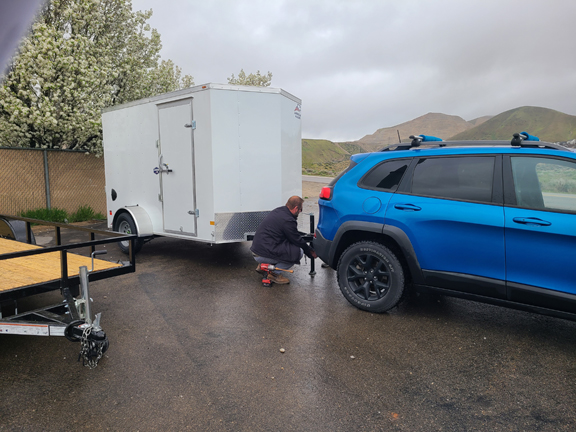
Dan had taken time off for Spring Break, which lined up almost perfectly. Mike and Dan got in some solid guy time during the days, and we got evenings with Sylvia and the kids. We even squeezed in a few games of Kub (a Norwegian lawn game). Three nights well spent.
Day 1 – The Border Crossing (More Stressful Than It Had to Be)
Wednesday, April 16th, we officially started the AlCan drive. First order of business: cross into Canada.
Now, I’ll be honest. The stress around this crossing was mostly self-inflicted. We’d been marinating in the media narrative about inflation, sky-high Alaska food prices, and the cost of, well, everything. Mike had been quietly stressing about fuel costs for the better part of a year — 3,000 miles one way, a diesel-thirsty Class A that gets 8 MPG, and Alaska prices that everyone in every Facebook group swears will bankrupt you.
So we did what any reasonable RVers would do: we made a $600 Costco run and stuffed every inch of our residential fridge with meat. And then we started reading Facebook posts about Canadian border restrictions on bringing meat into the country. Two days after the haul. Of course.
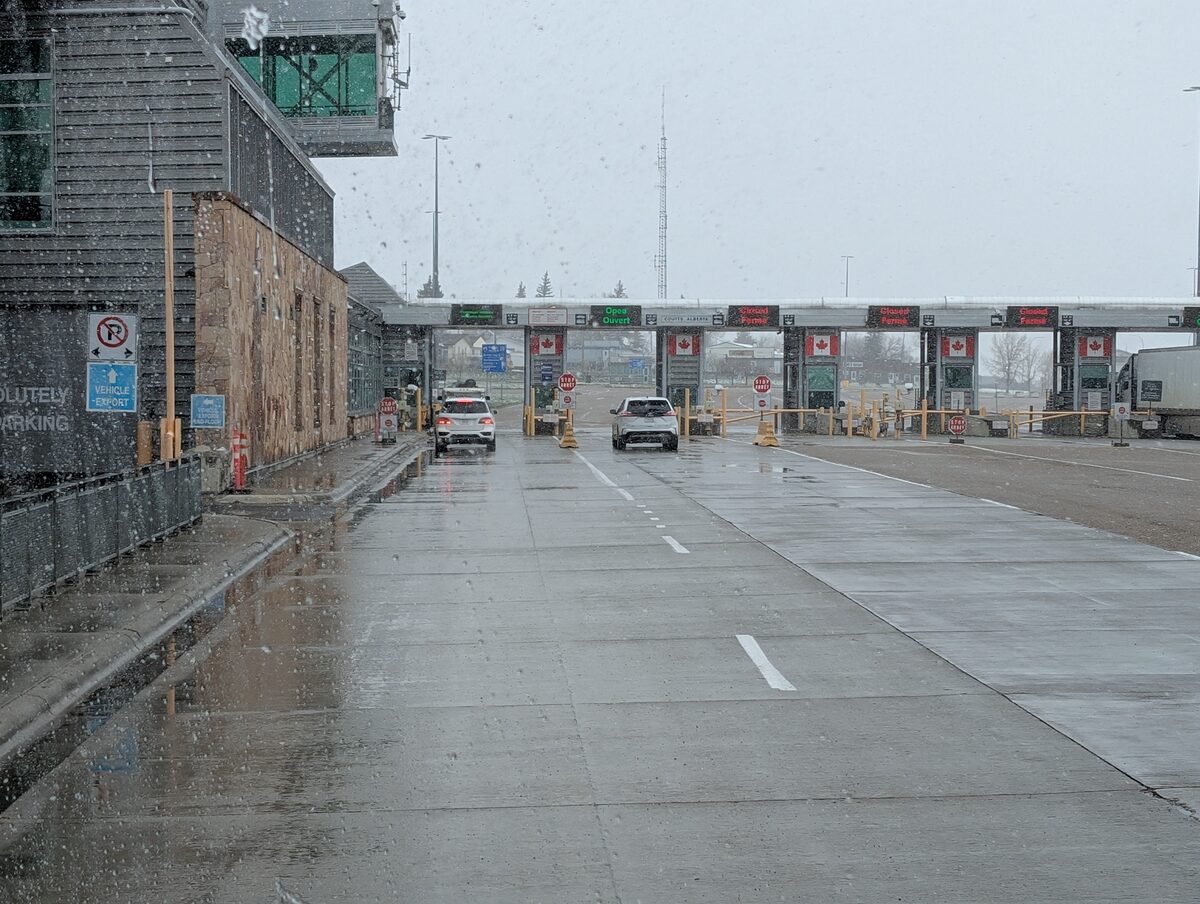
Fears unwarranted?
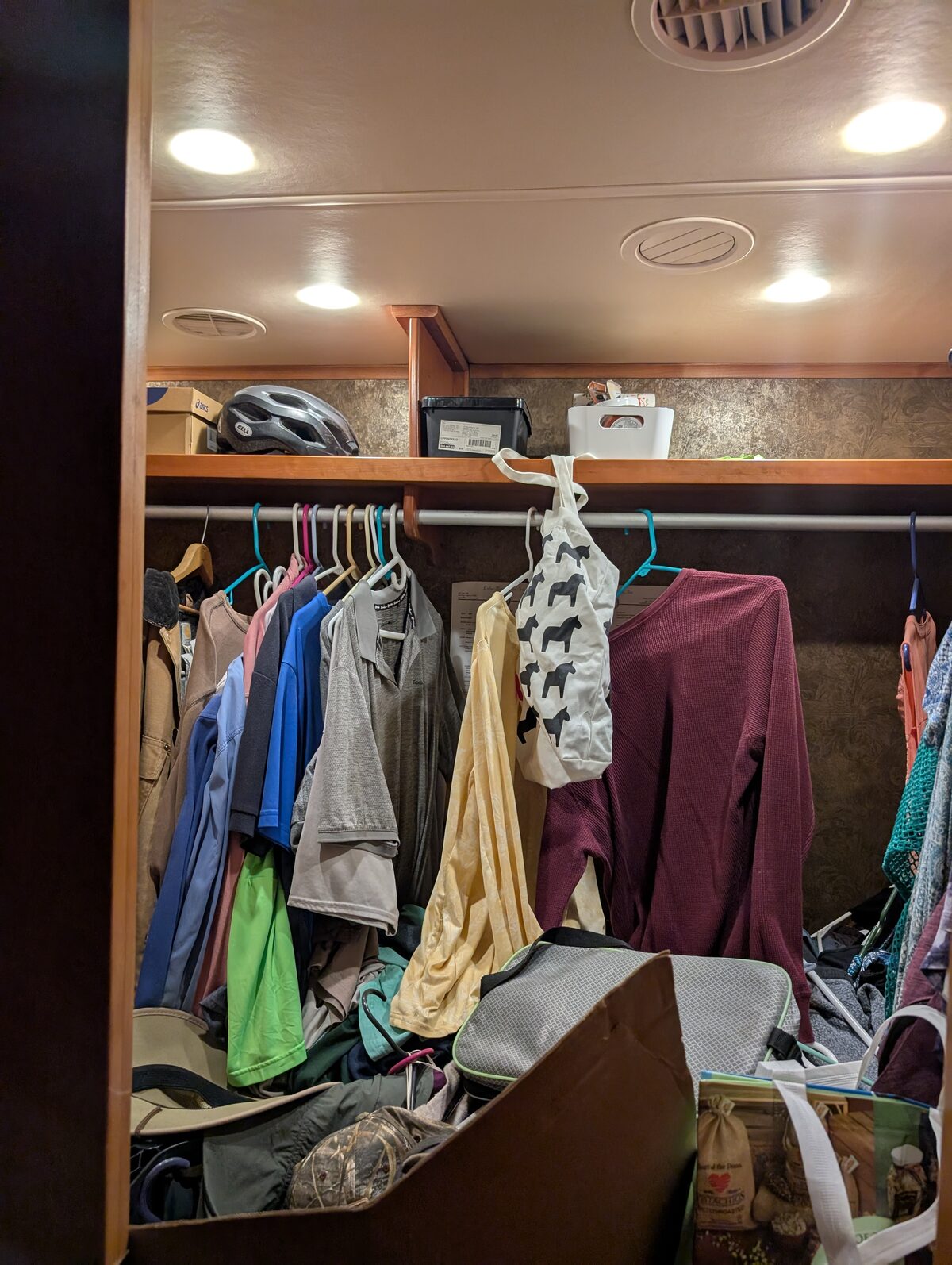
Turns out, the fears were completely unfounded. The border patrol at Sweet Grass, Montana (I-15/Coutts, Alberta) did pull us over and into an inspection garage. Two officers went through the RV top to bottom, and I won’t lie — watching them undo my carefully packed closet was… not fun. But they didn’t care about the meat. Anything for personal consumption? Totally fine. No fruits or vegetables on board. No problem. We were driving to Anchorage for a job, we had a sensible timeline, we’d stocked up to manage costs — it all made sense to them, and it was a non-issue.
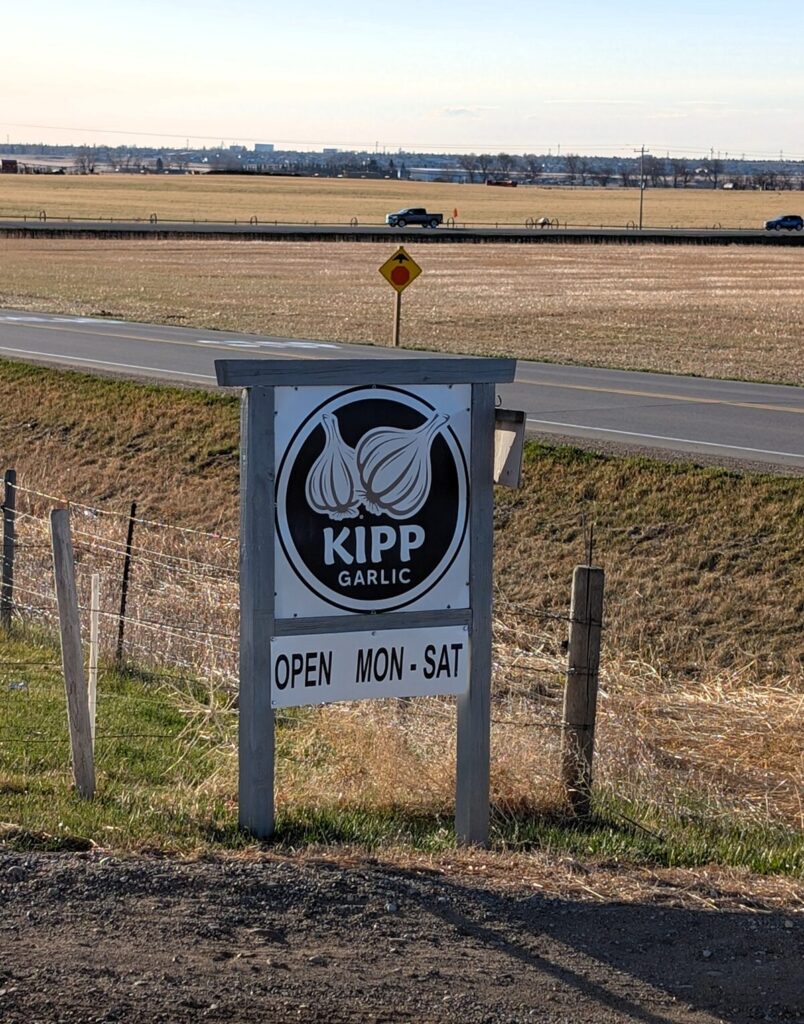
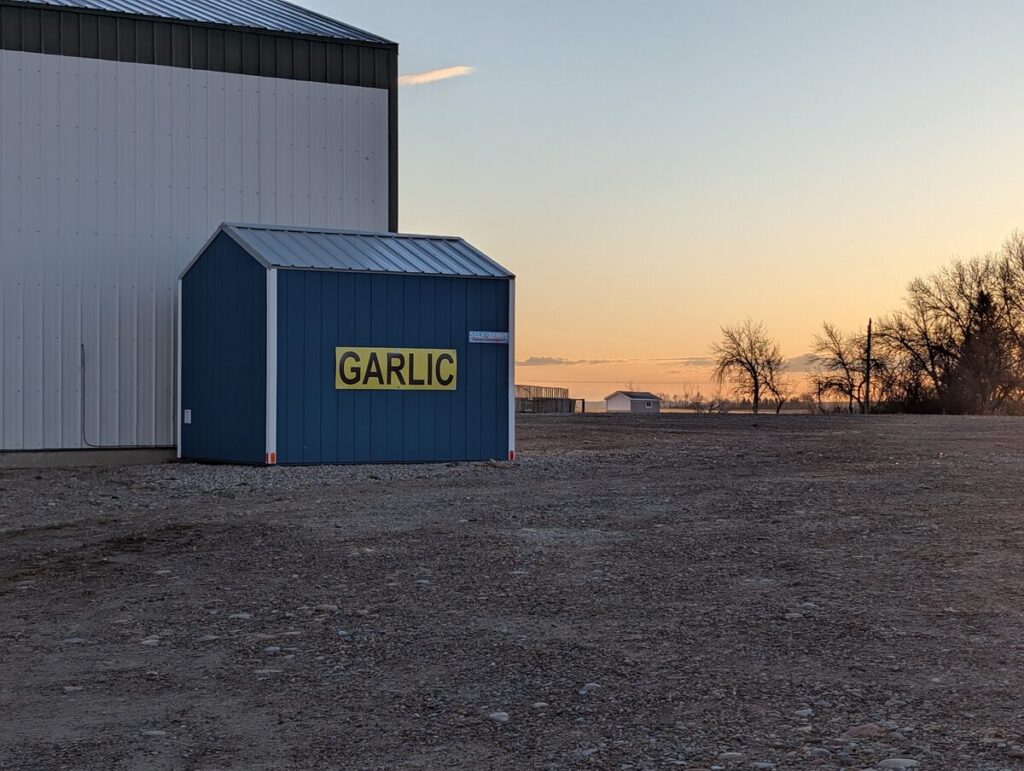
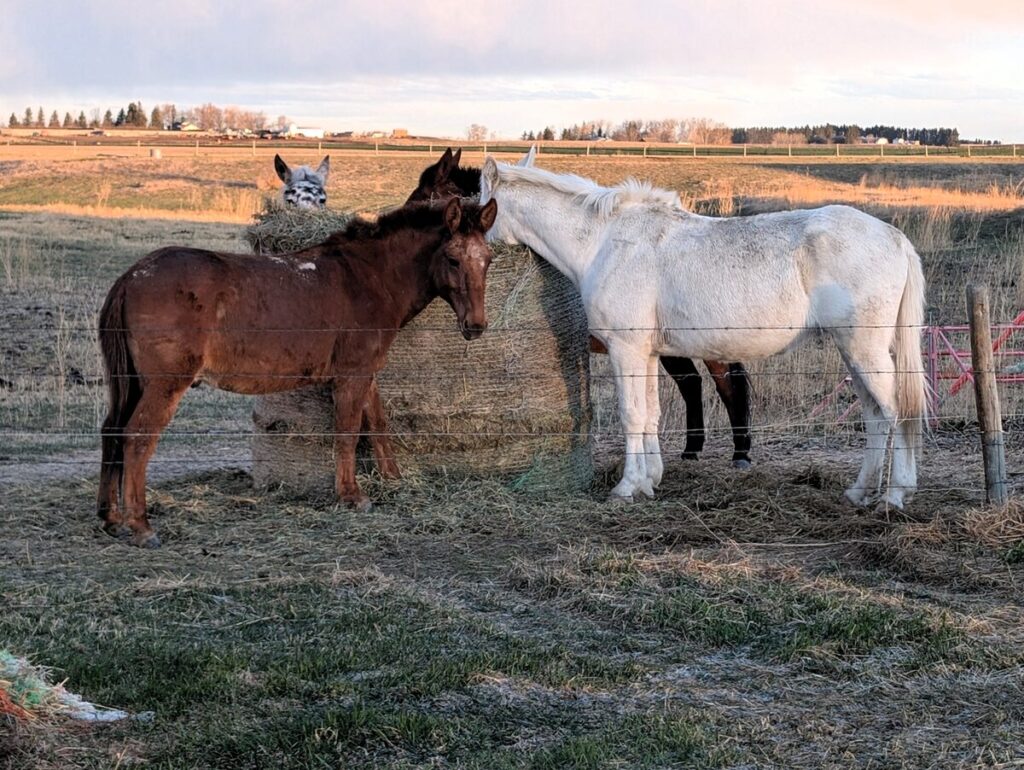
We spent about an hour there and came out fine. We stayed that night at a Harvest Host in Lethbridge — Kipp Garlic. Quiet, low-key, interesting garlic varieties. Didn’t even see the owners, which is one of my favorite parts of Harvest Hosts, chatting with the owners, but still a peaceful night.
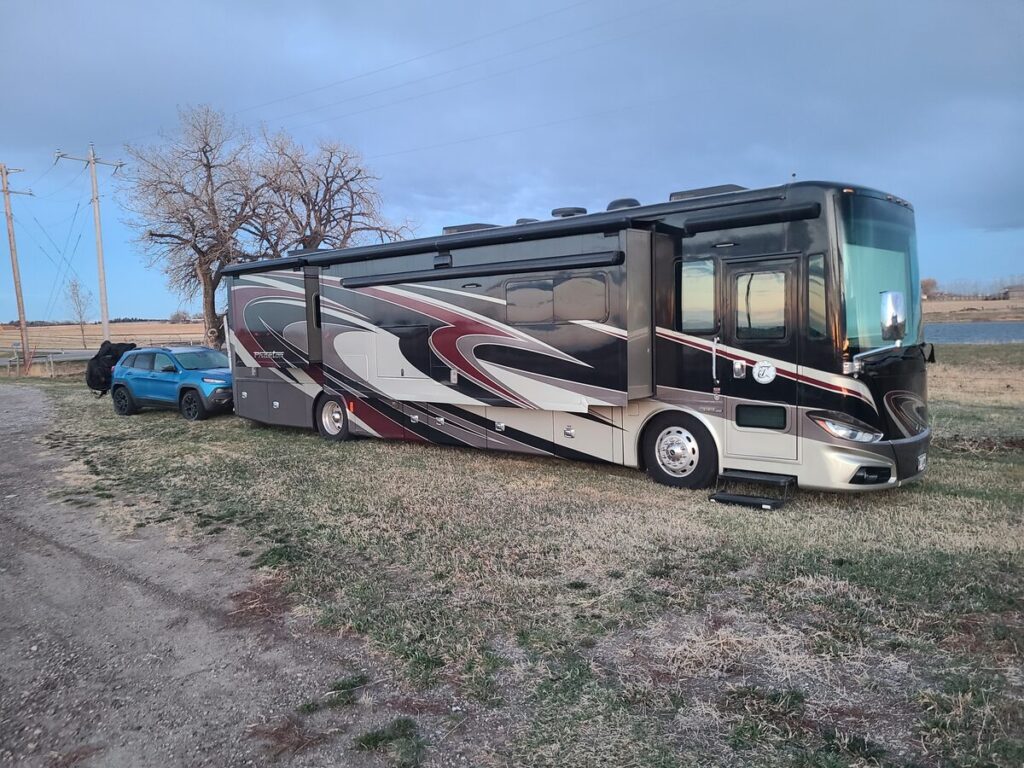
Pro tip for RVers crossing into Canada: If you’re driving through to Alaska, the rules are different than if you’re stopping in Canada for a vacation. Personal consumption food — including meat — is generally fine. Don’t let Facebook scare you.
Day 2 – Canadian Prairie and Big Cities
This stretch felt a lot like driving through the American prairie states — wide open fields, big sky, and the occasional major city. Alberta’s big two, Calgary and Edmonton, dot the route.
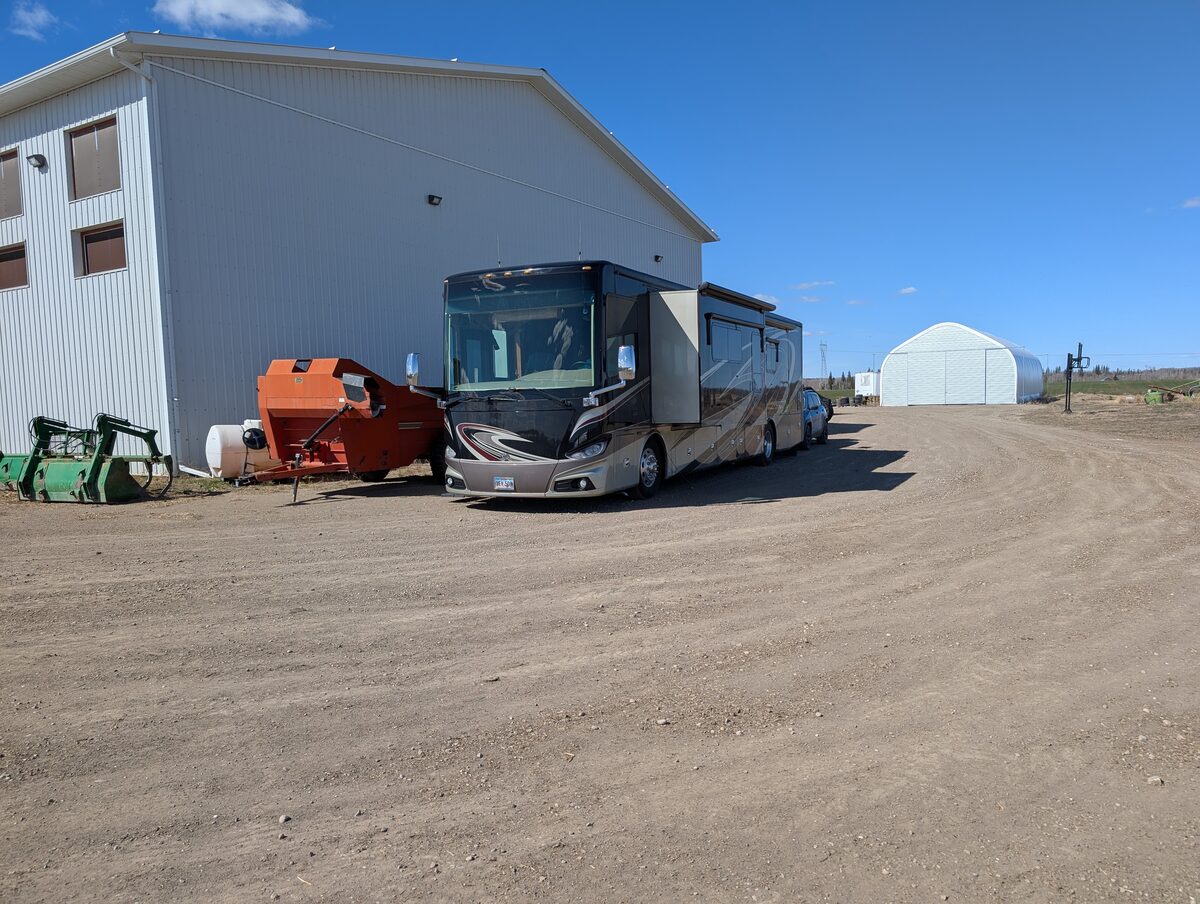
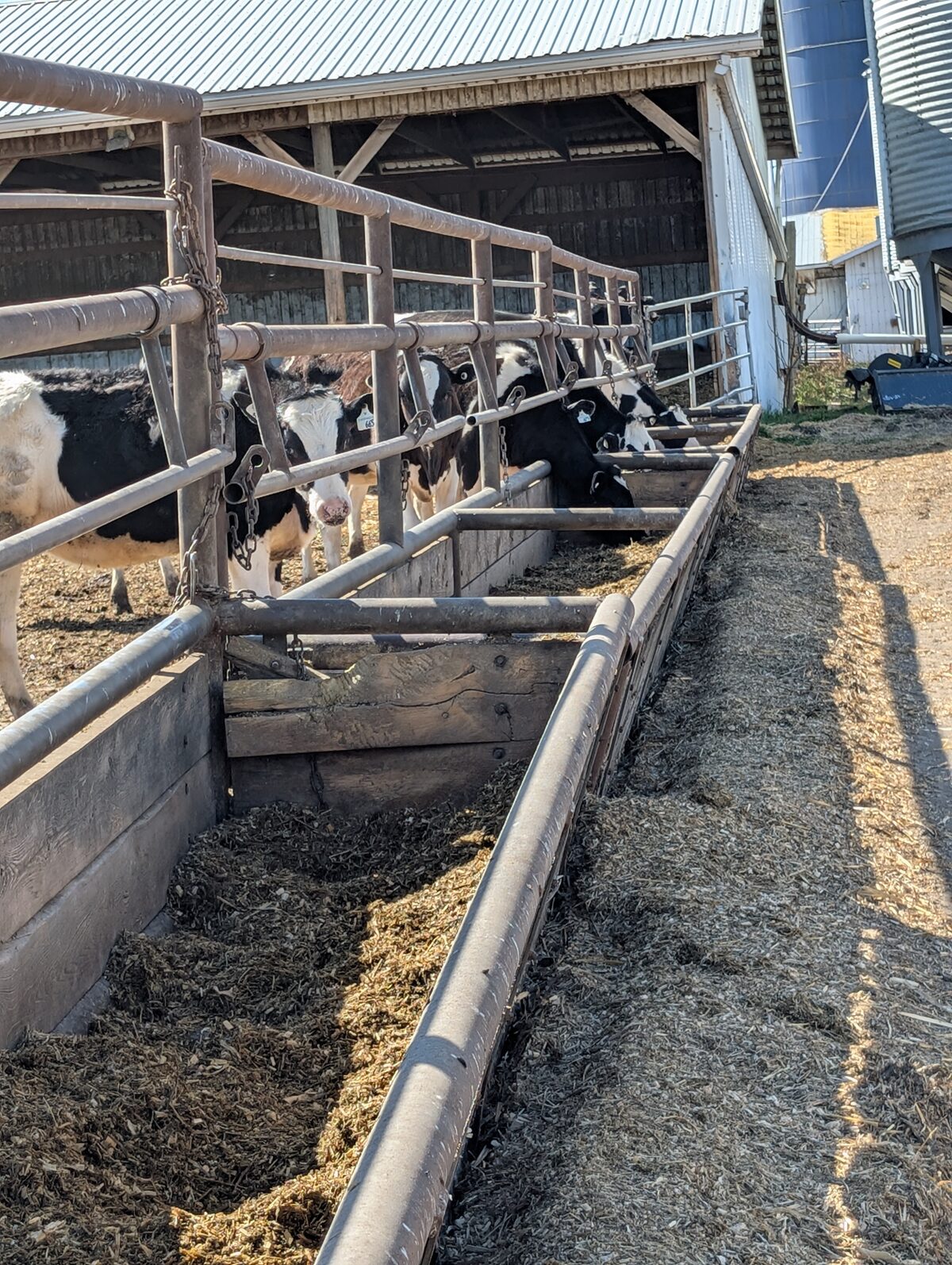
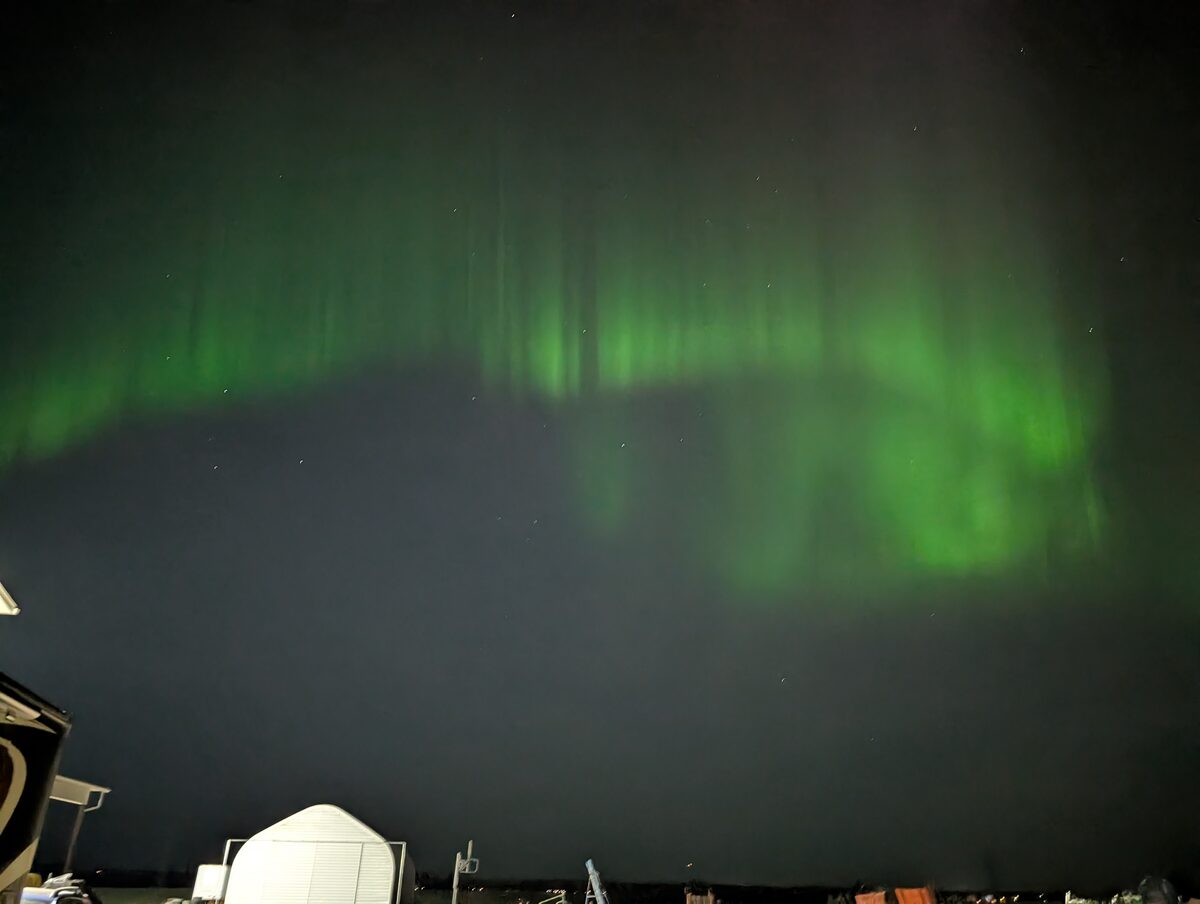
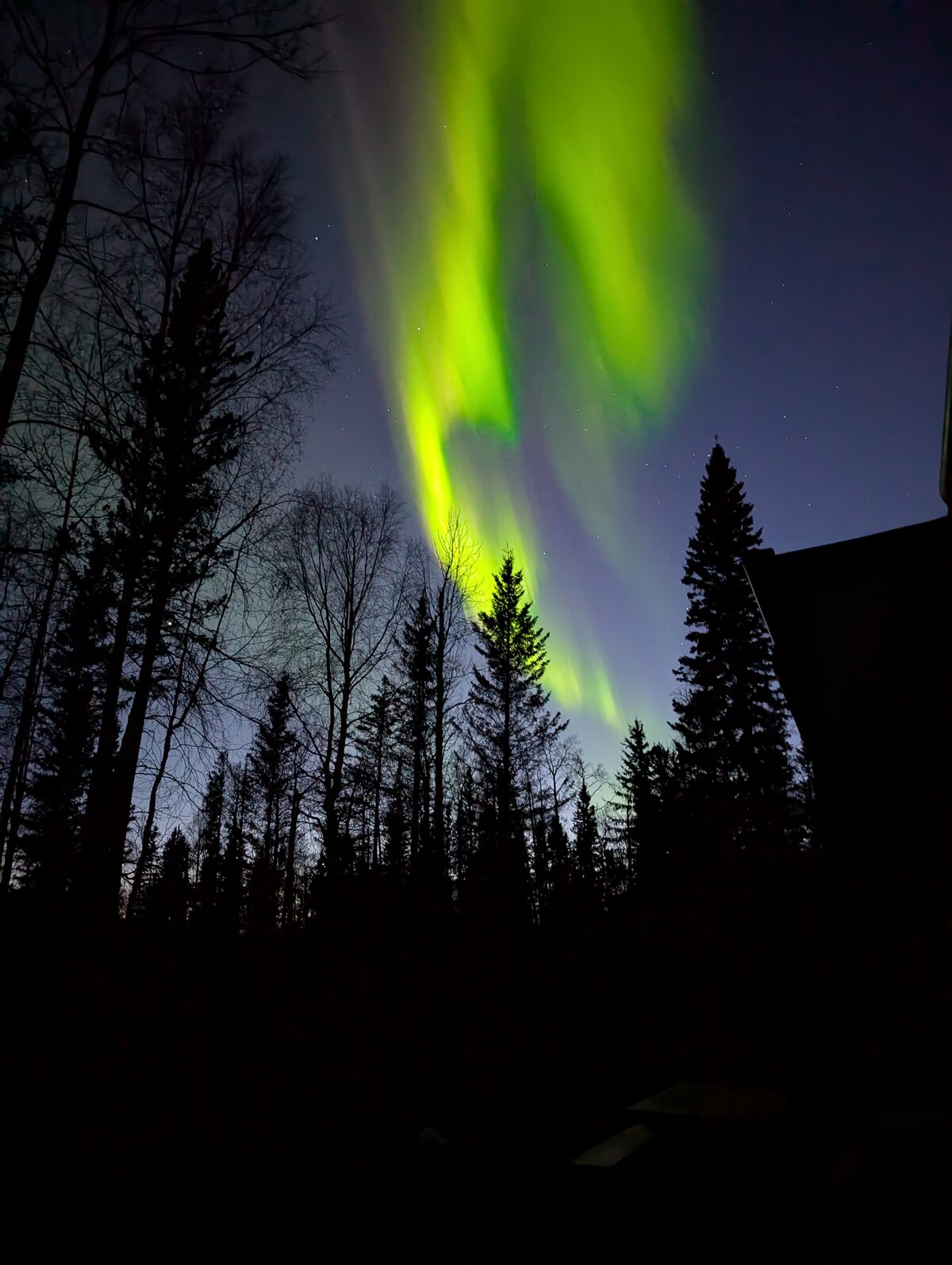
We stayed that night at another Harvest Host near Edmonton: CK Jesperson Farms. A large, authentic working farm — a little early in the season for anything to be for sale, but fun to see the cows and soak in the farm atmosphere. And bonus: we got a Northern Lights show that night. Being close to the city meant it wasn’t the most brilliant display, but we were absolutely thrilled. We’ll take it every time.
Day 3 – Wind Day
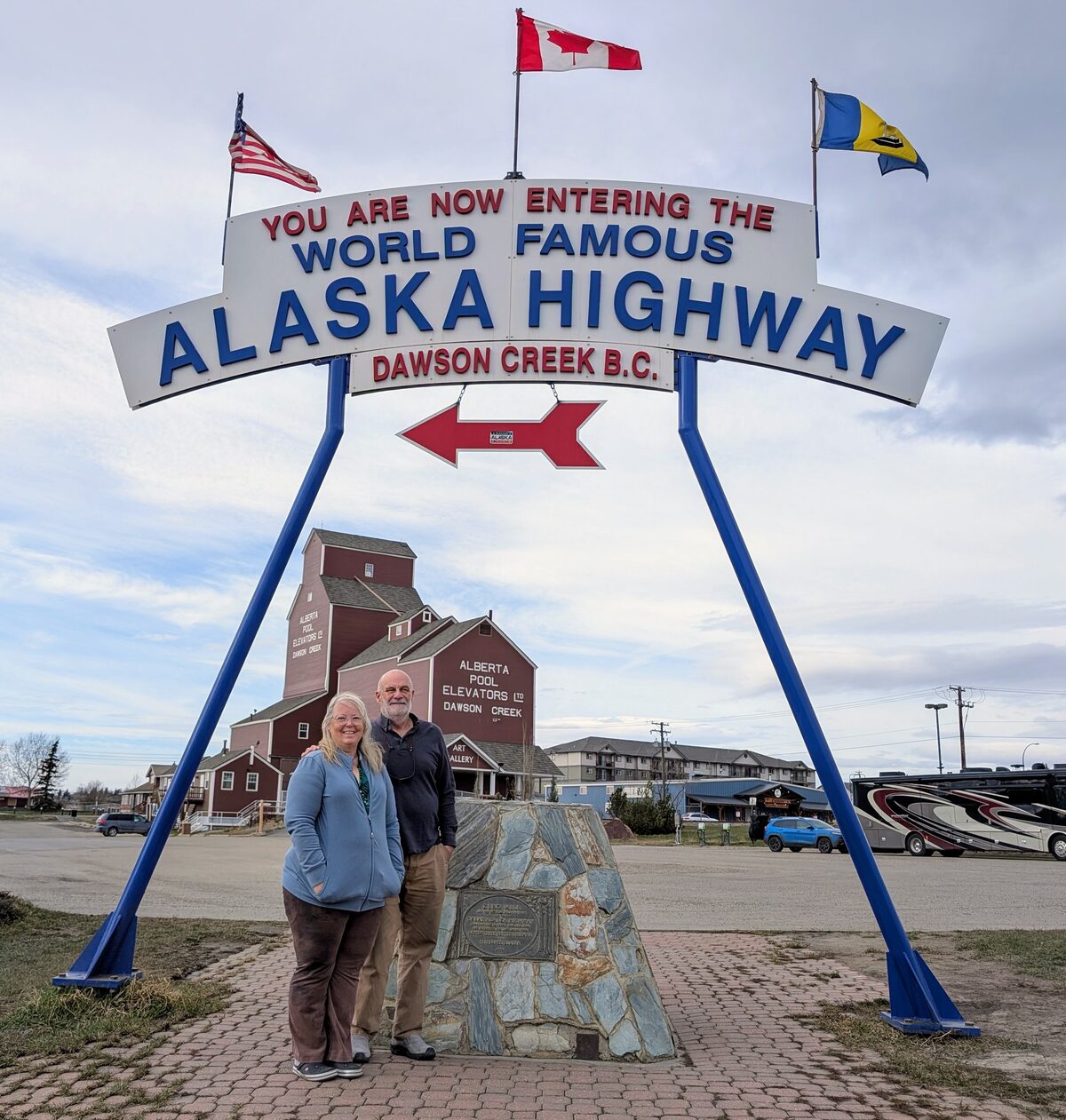
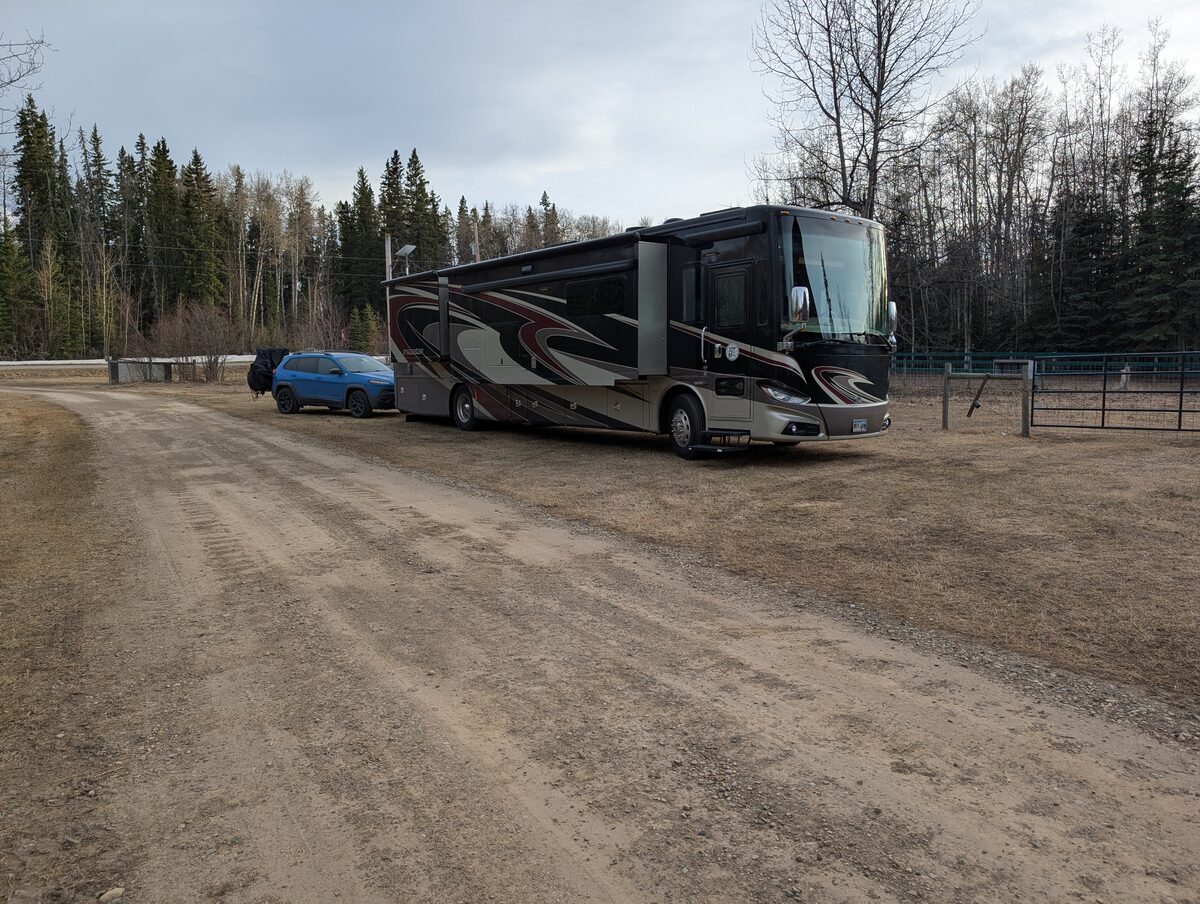
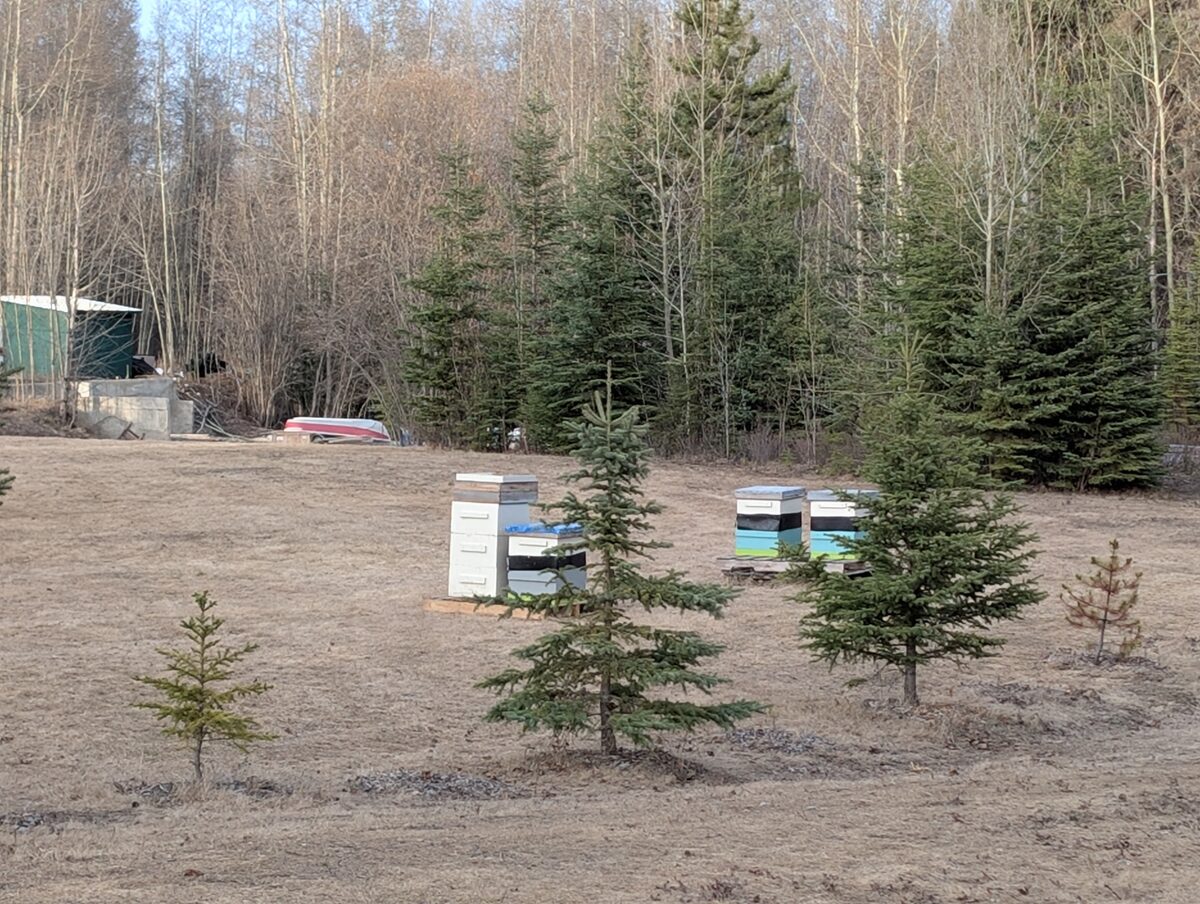
Honestly? This day was a slog. Long miles, still not much wildlife, and SUPER windy. That wind had us slowing down more than we wanted to. We pushed through and stayed at a Harvest Host outside of Dawson Creek — Farmfresh. This one was my favorite Harvest Host of the whole trip. A small, rural family farm — private, quiet, beautiful. She sold us honey and eggs. That kind of stop is exactly why I love Harvest Hosts.
And Dawson Creek is a big deal — it’s the official start of the Alaska Highway. I love the history of this road.
Day 4 – Snow Day
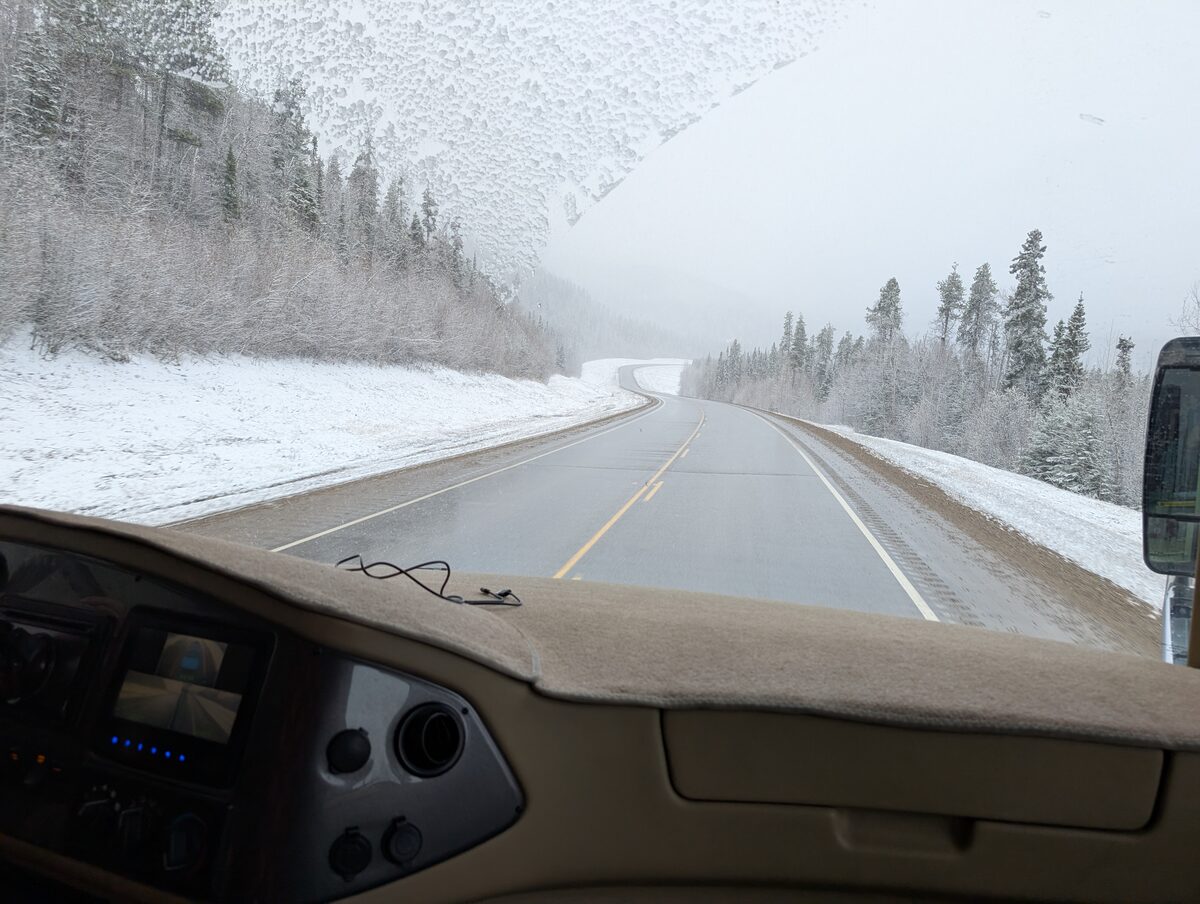
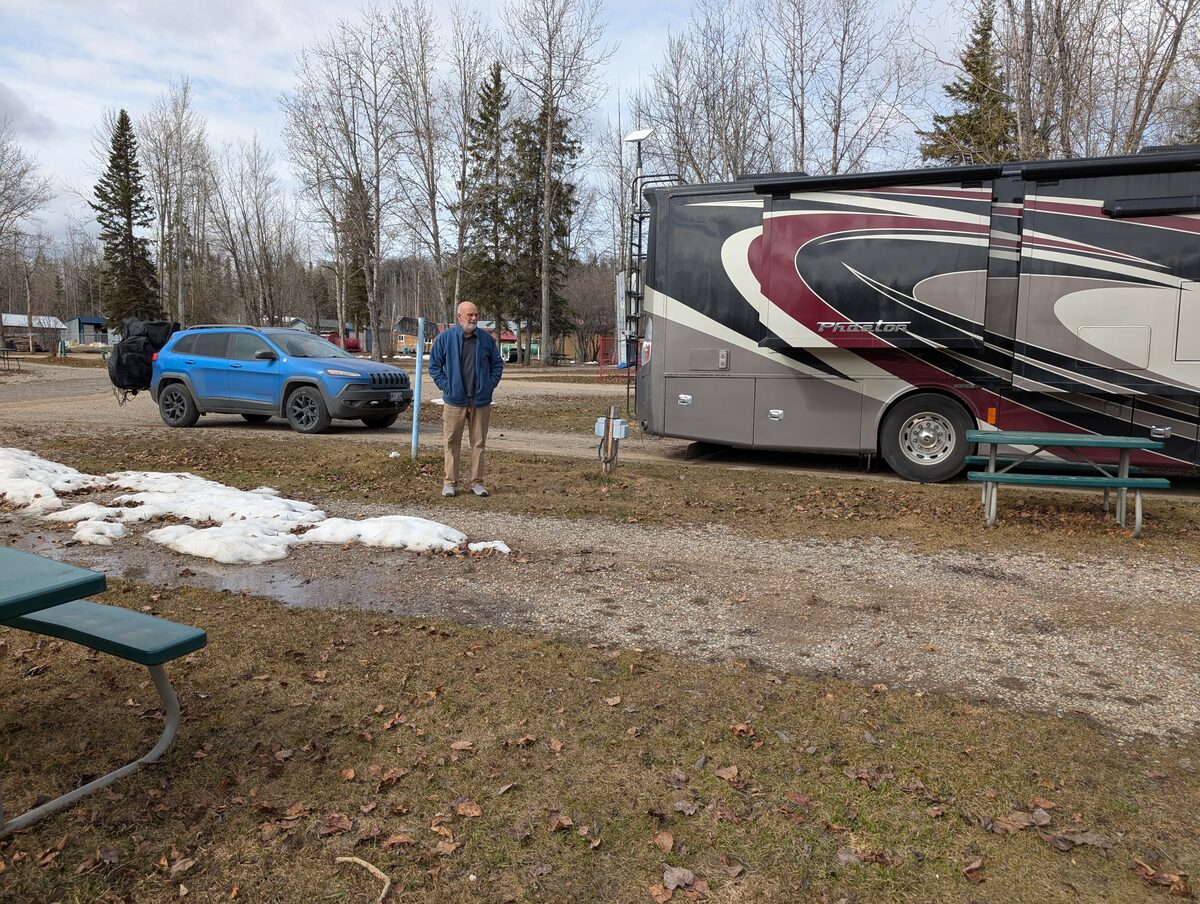
Snow. Every. Day. of. this. trip. We stayed the night in Fort Nelson at a campground that had barely opened for the season — no running water, restaurant closed. We had to drive across the street to the city dump station in the morning. Not glamorous, but that’s the AlCan in April.
Day 5 – Finally, Some Wildlife! (And Cinnamon Rolls)
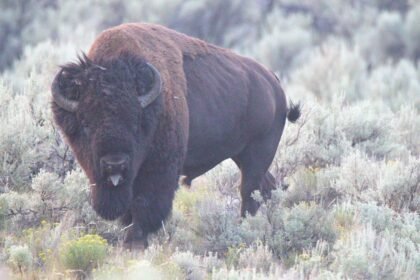
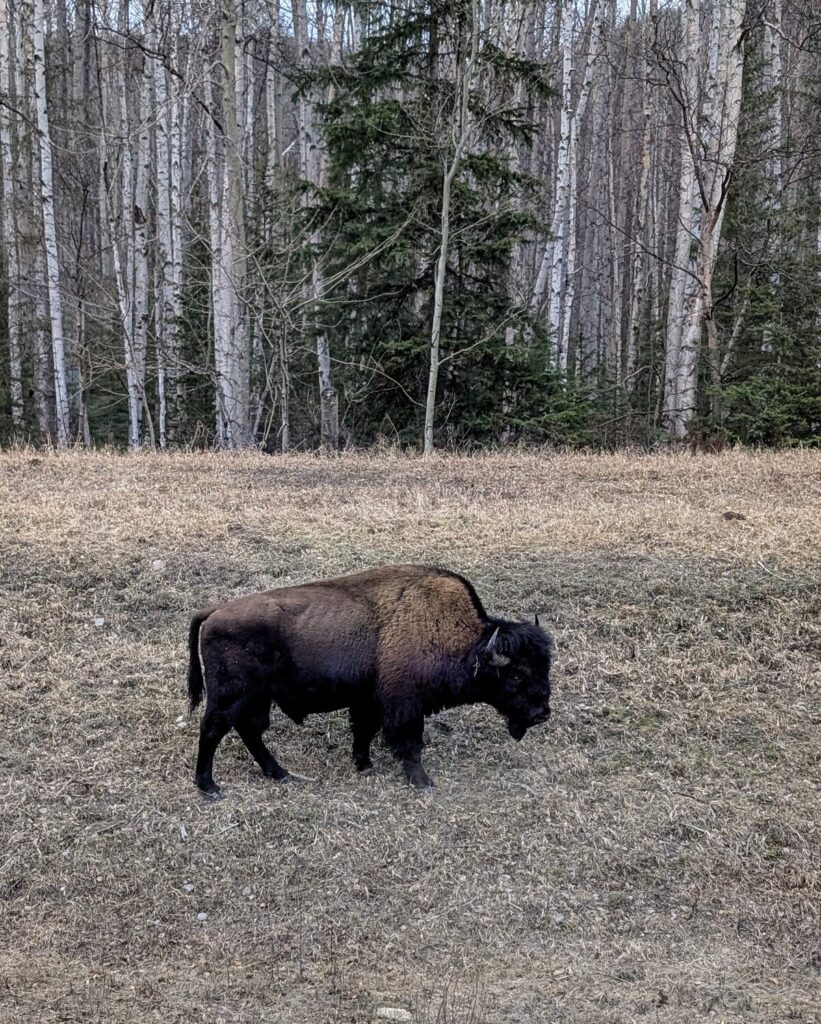
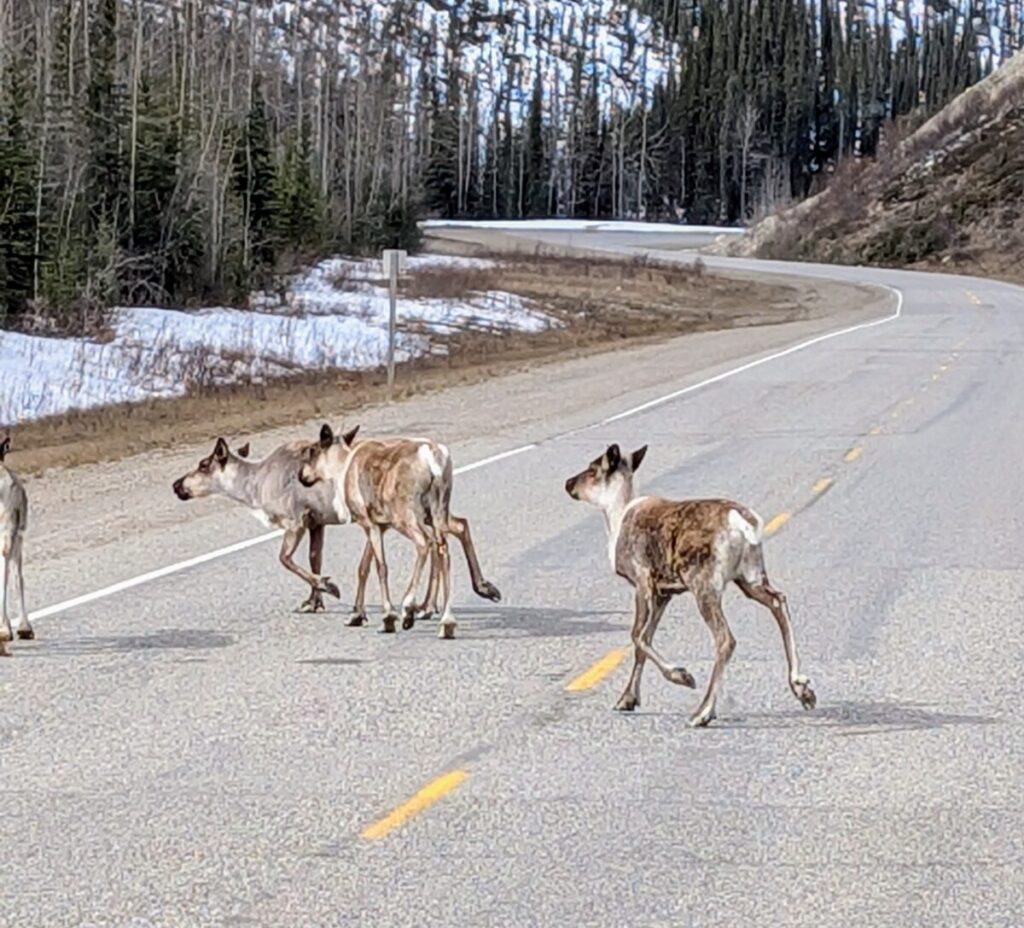
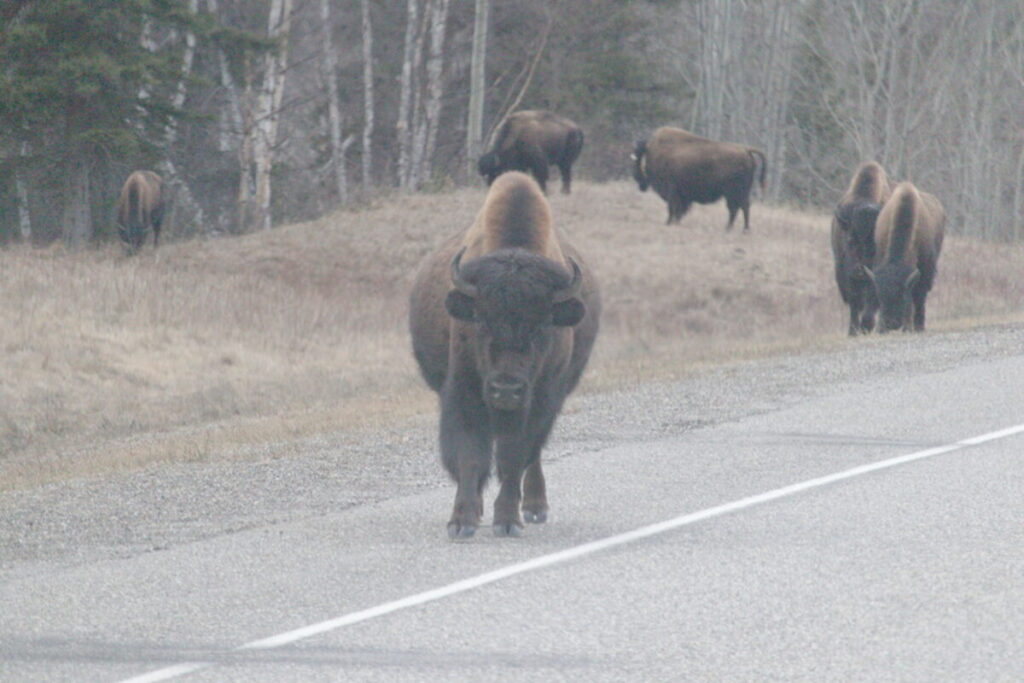
Not a ton, but after miles and miles you hope to see SOMETHING. A group of Caribou! A few hundred bison! Stone sheep! The scenery started delivering. Never did see any bear or moose though.
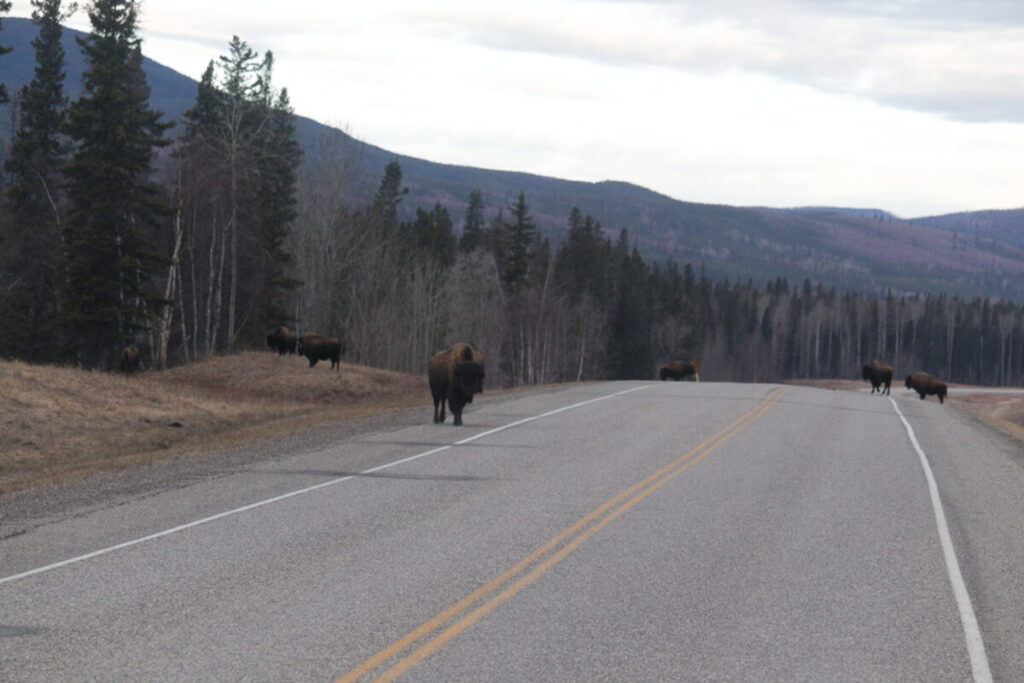
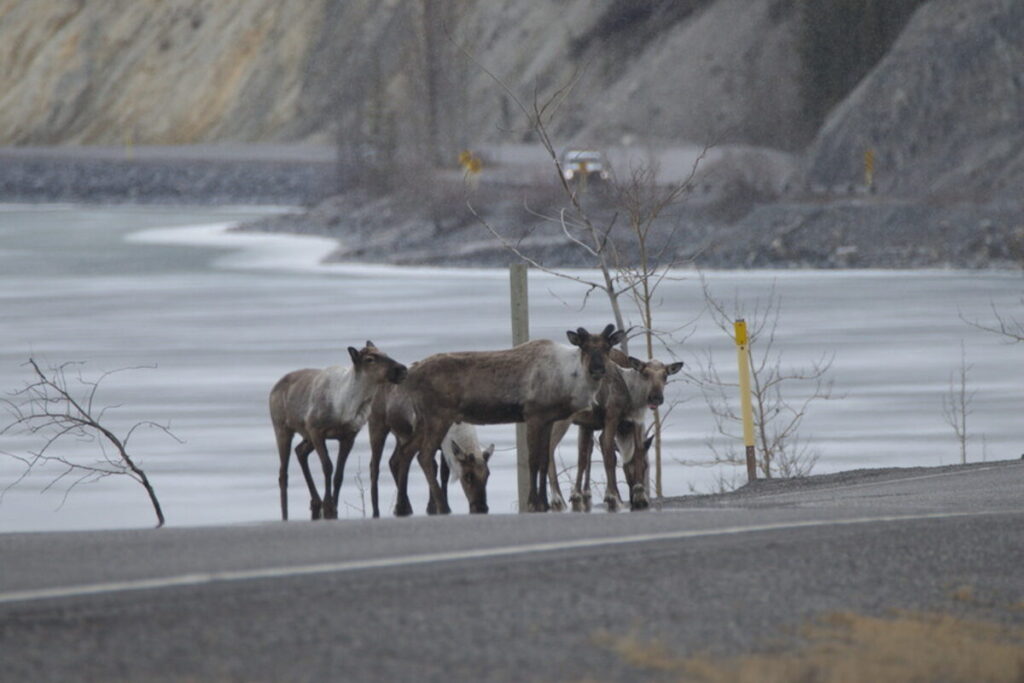
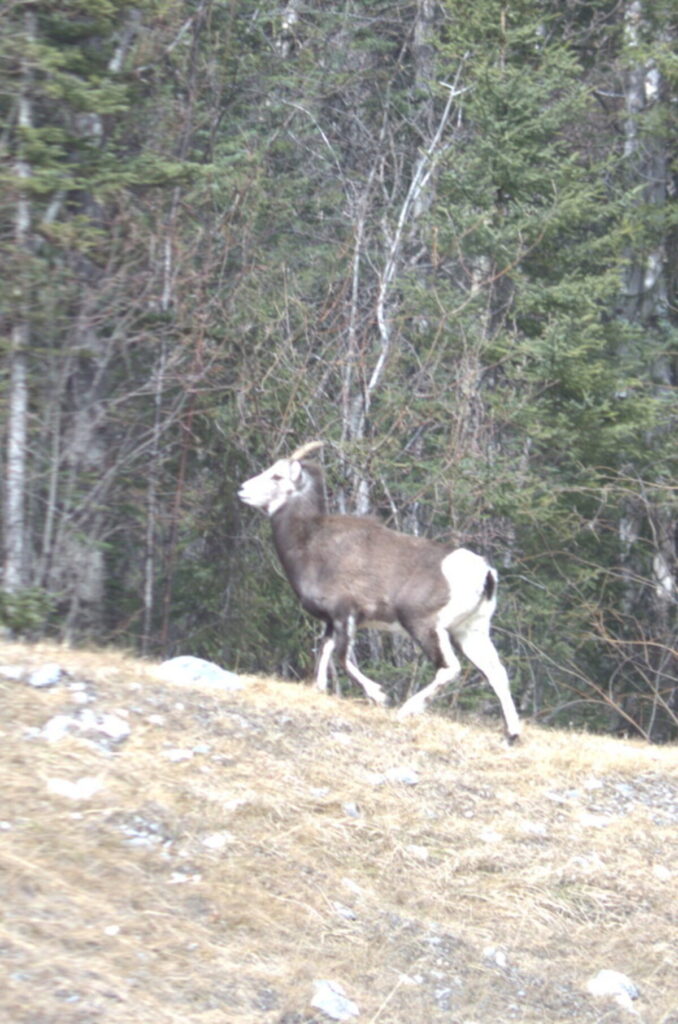
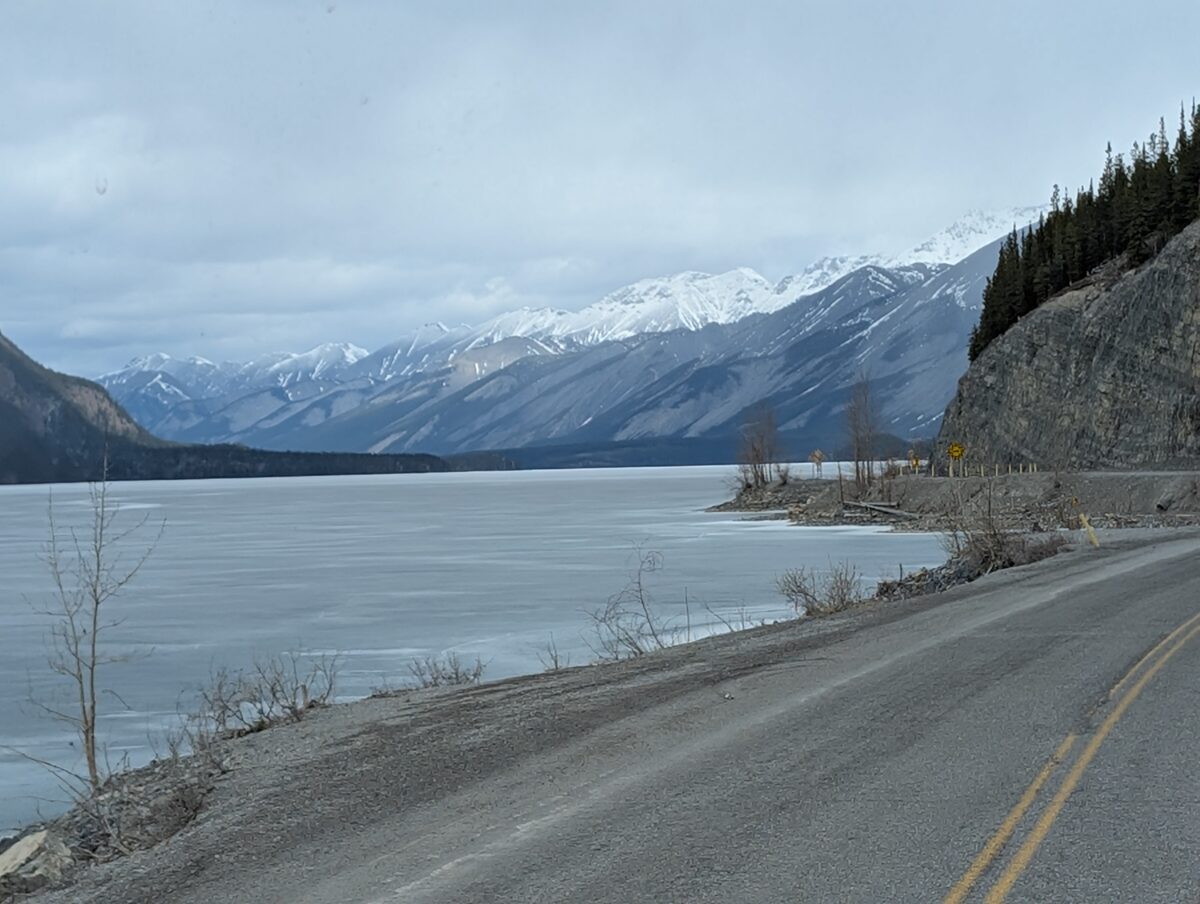
We also stopped at Tetsa River Lodge for what they bill as “the world’s best cinnamon rolls.” Mike is a connoisseur of the form. His verdict: good, pricey, probably not the world’s best — but a great stop regardless.
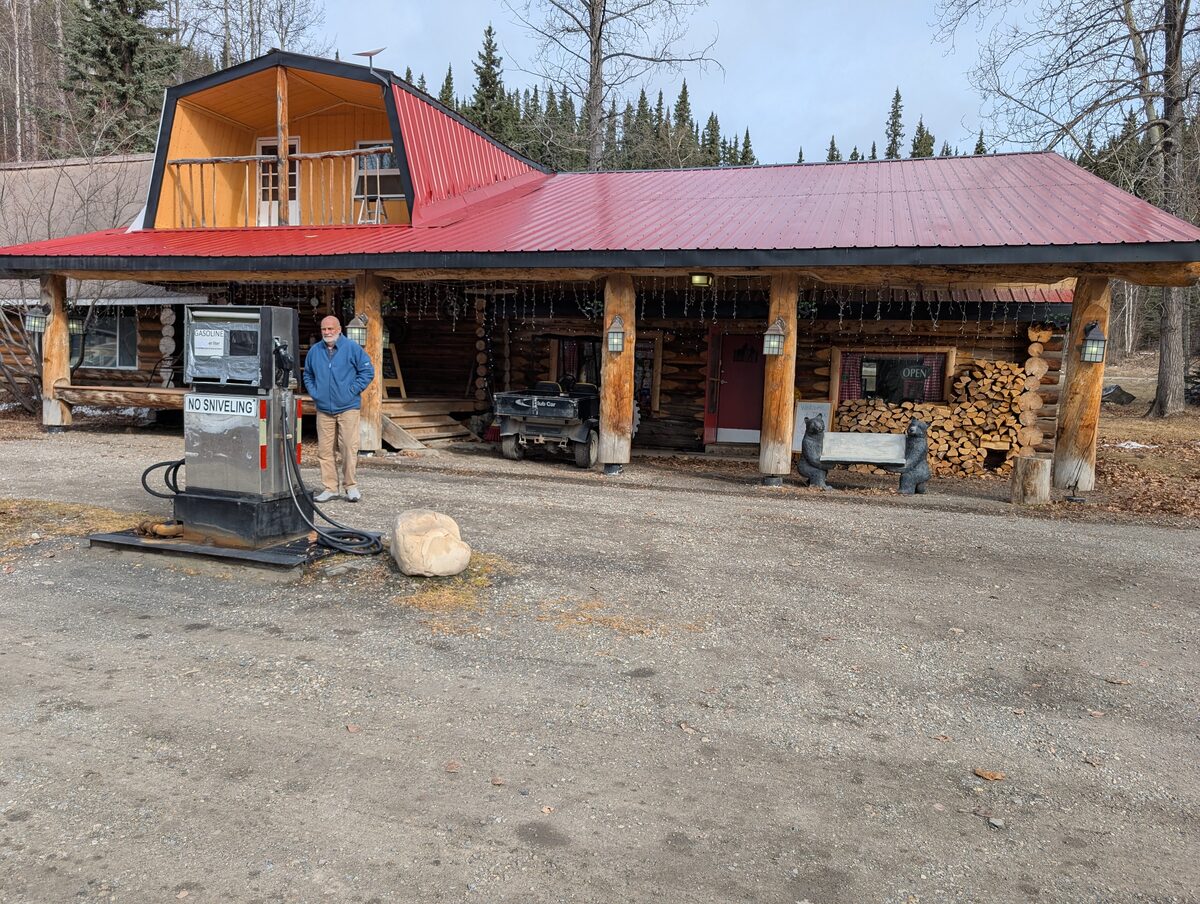
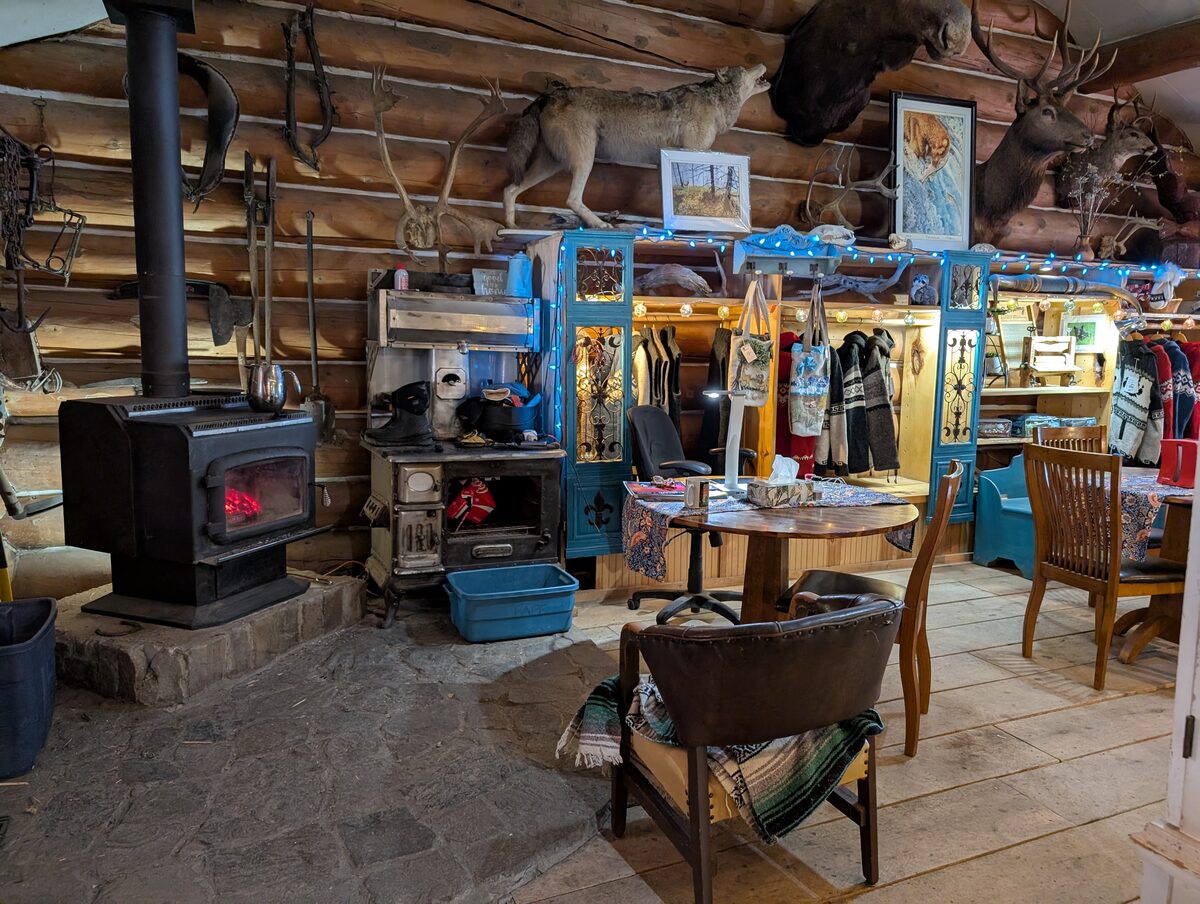
Liard Hot Springs
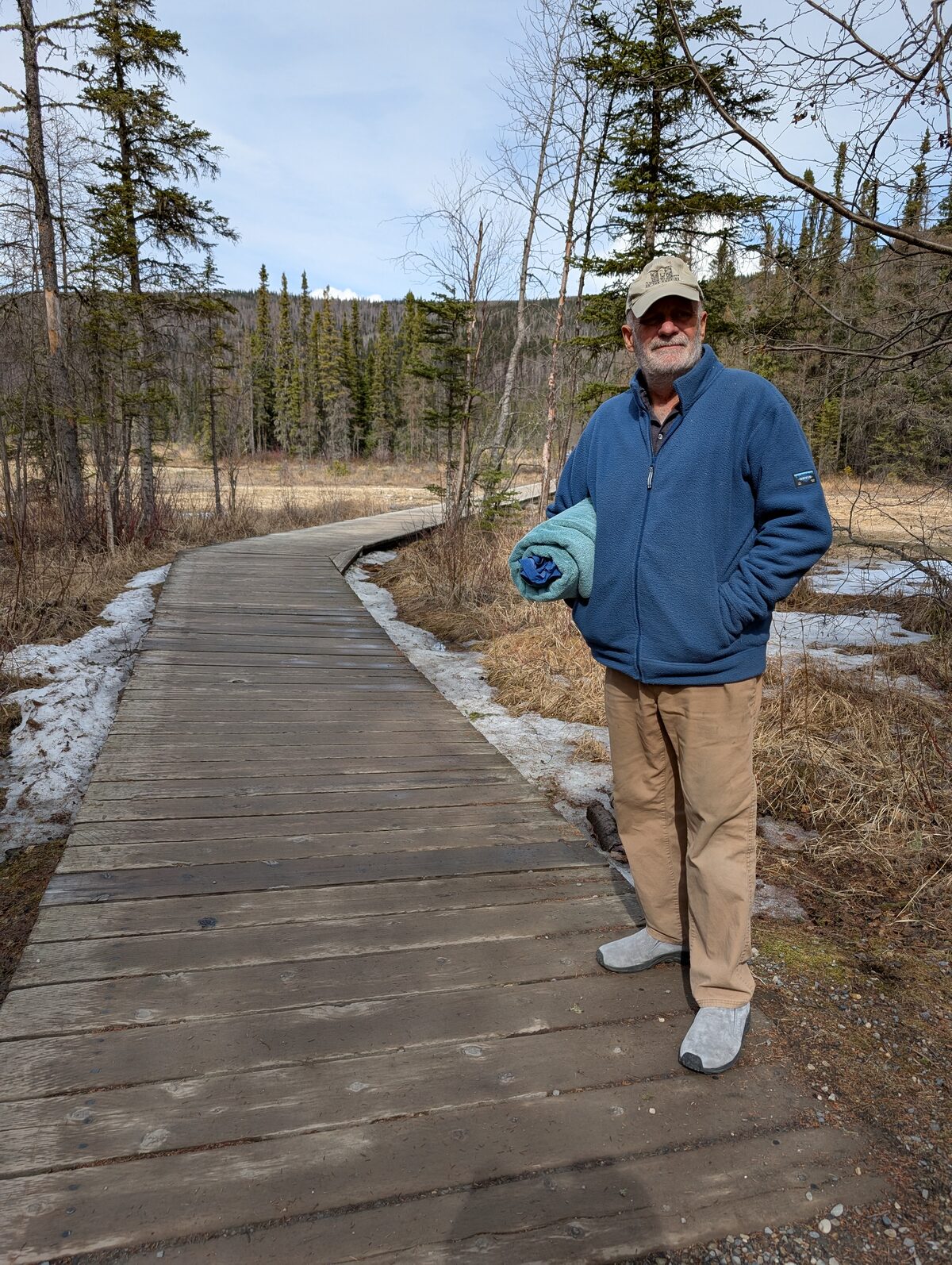
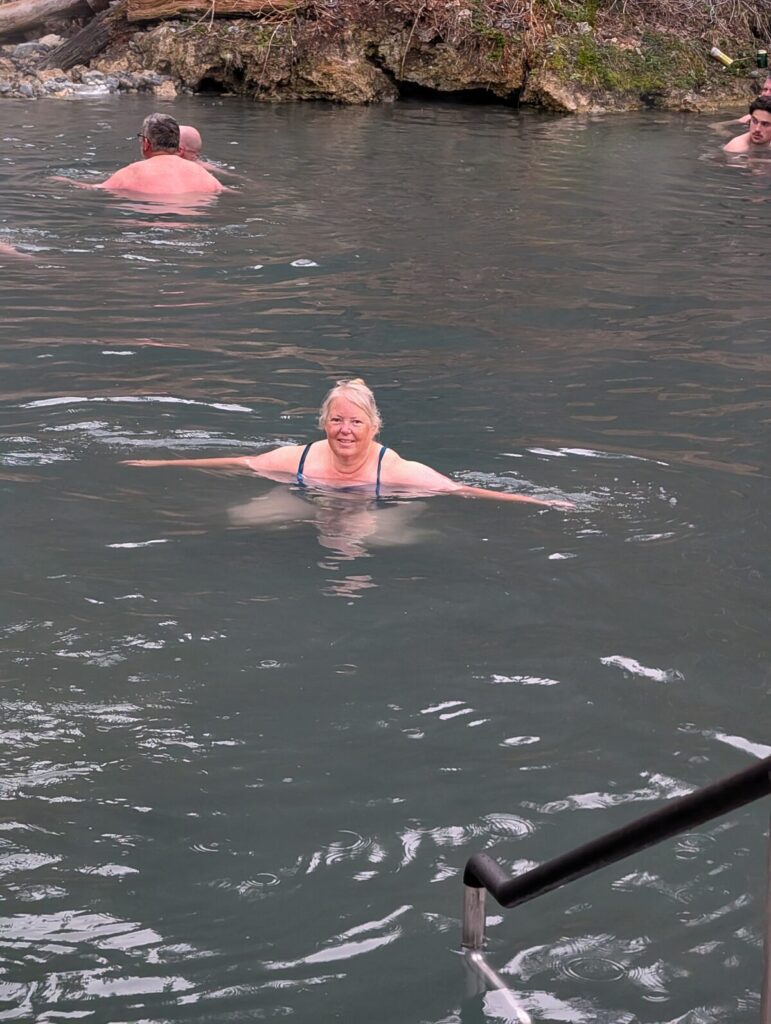
The highlight of this day was Liard Hot Springs. We pulled in by lunchtime, set up camp, and spent the afternoon soaking. The water coming out of the source is scalding hot — I’d guess 120°F — but it cools as it flows away, so you just pick your spot. Highly, highly recommend this stop for any AlCan traveler.
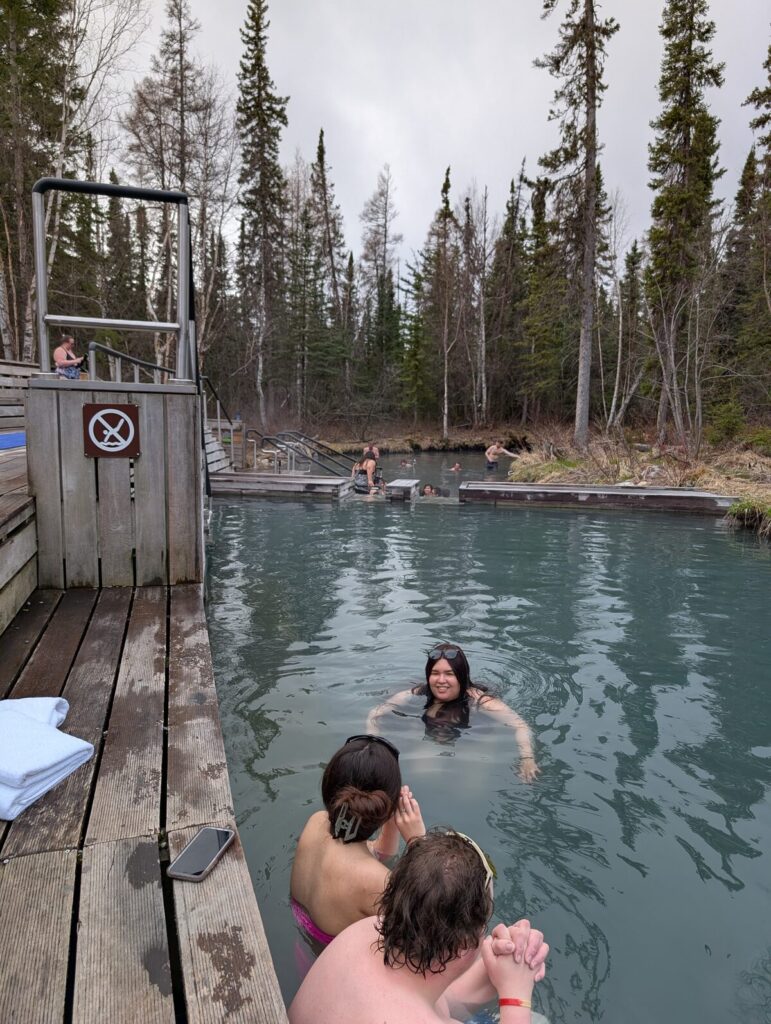
The hot springs pool at Liard — pick your spot based on how hot you like it.
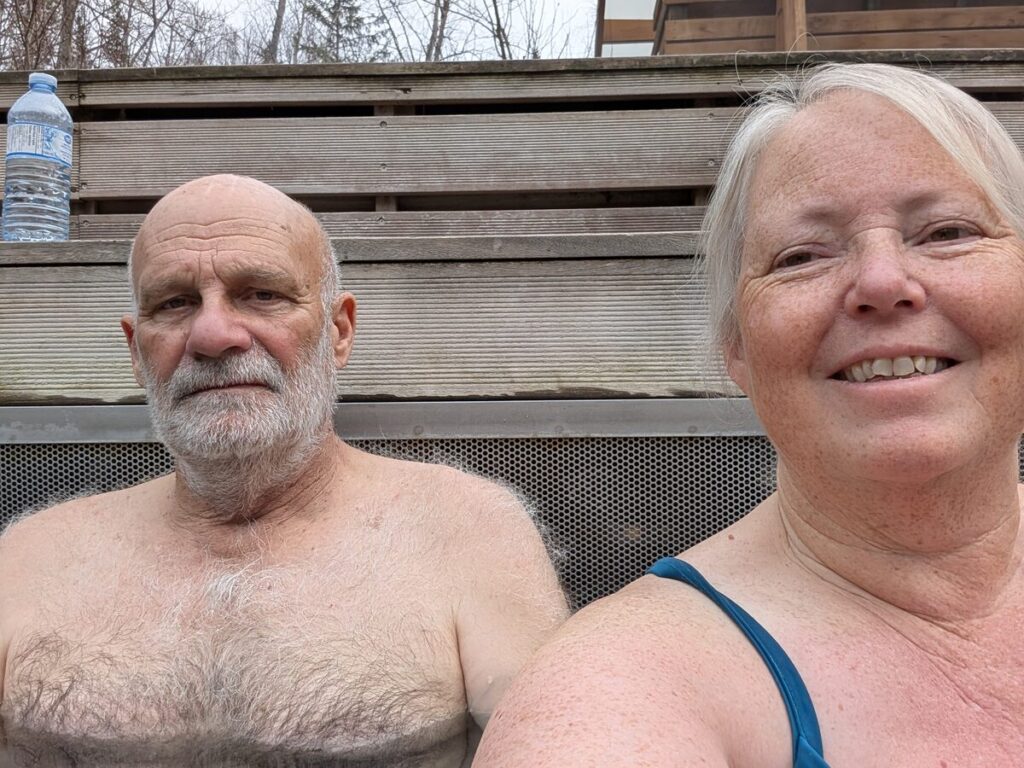
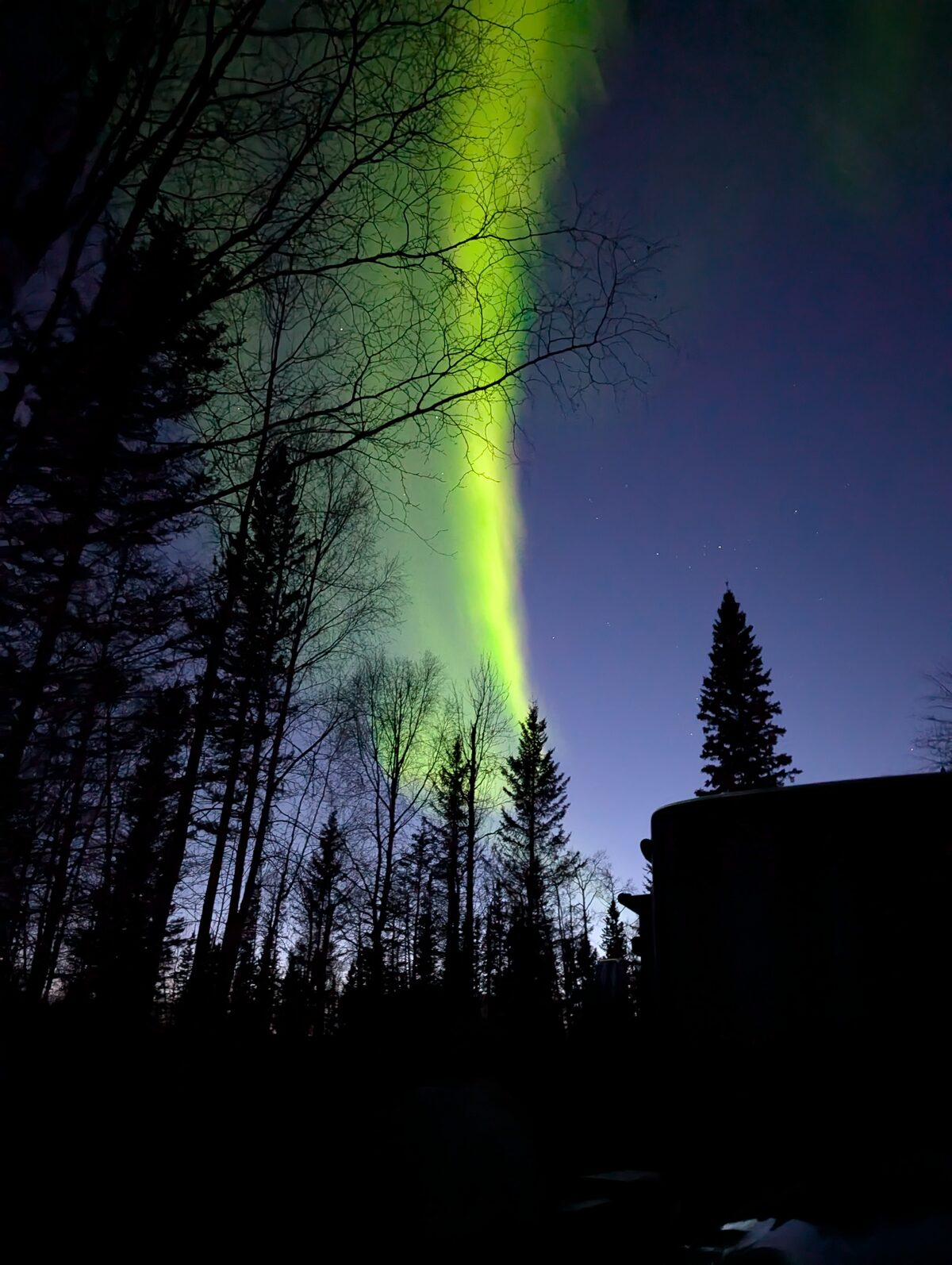
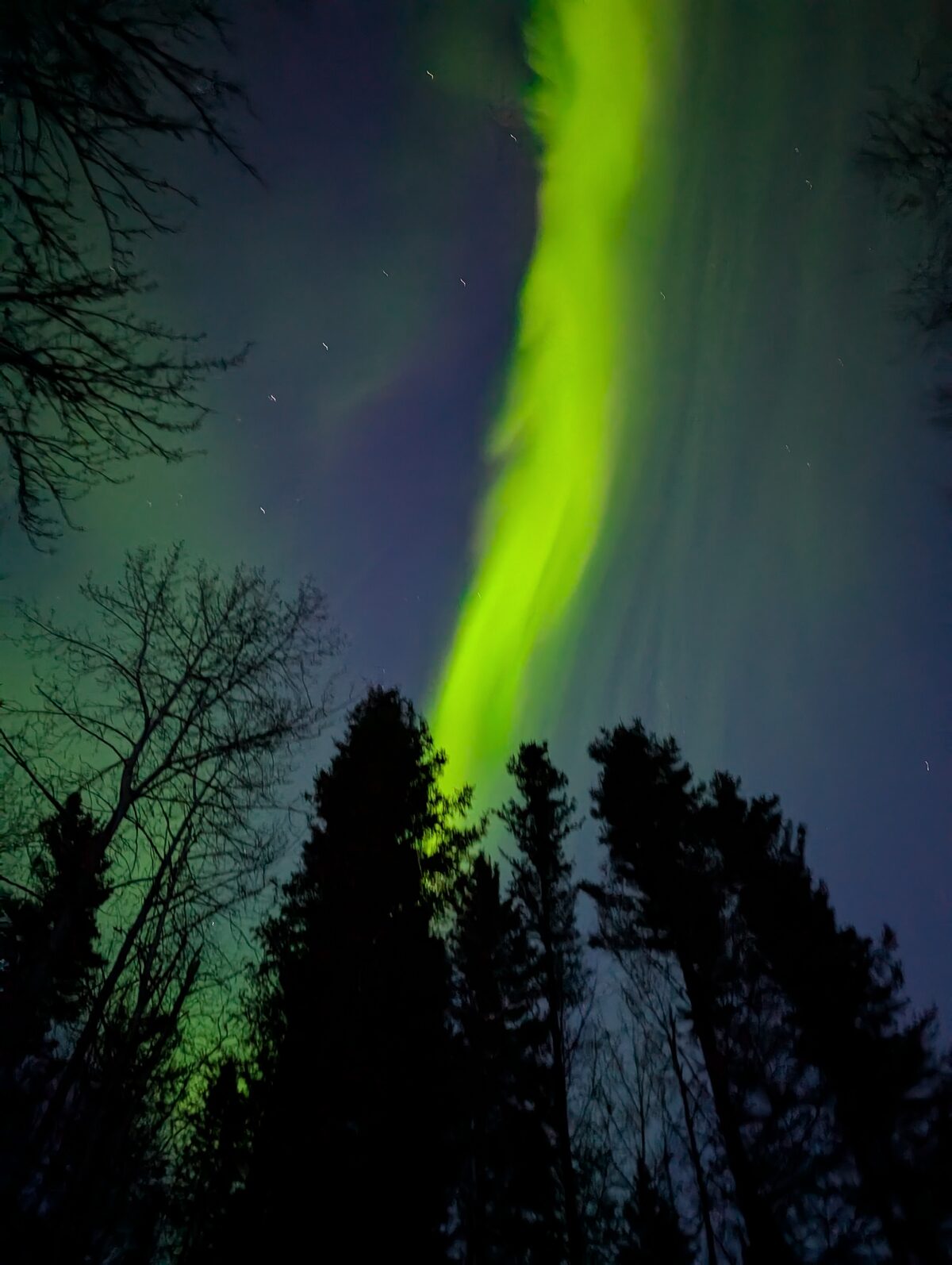
The campground was quiet and dark. Like, really dark. Which meant another Northern Lights show — and this one was wonderful. They moved, they shifted, they danced (okay, maybe slowly — but they danced). Bucket list moment, no complaints.
Day 6 – Pile on the Miles
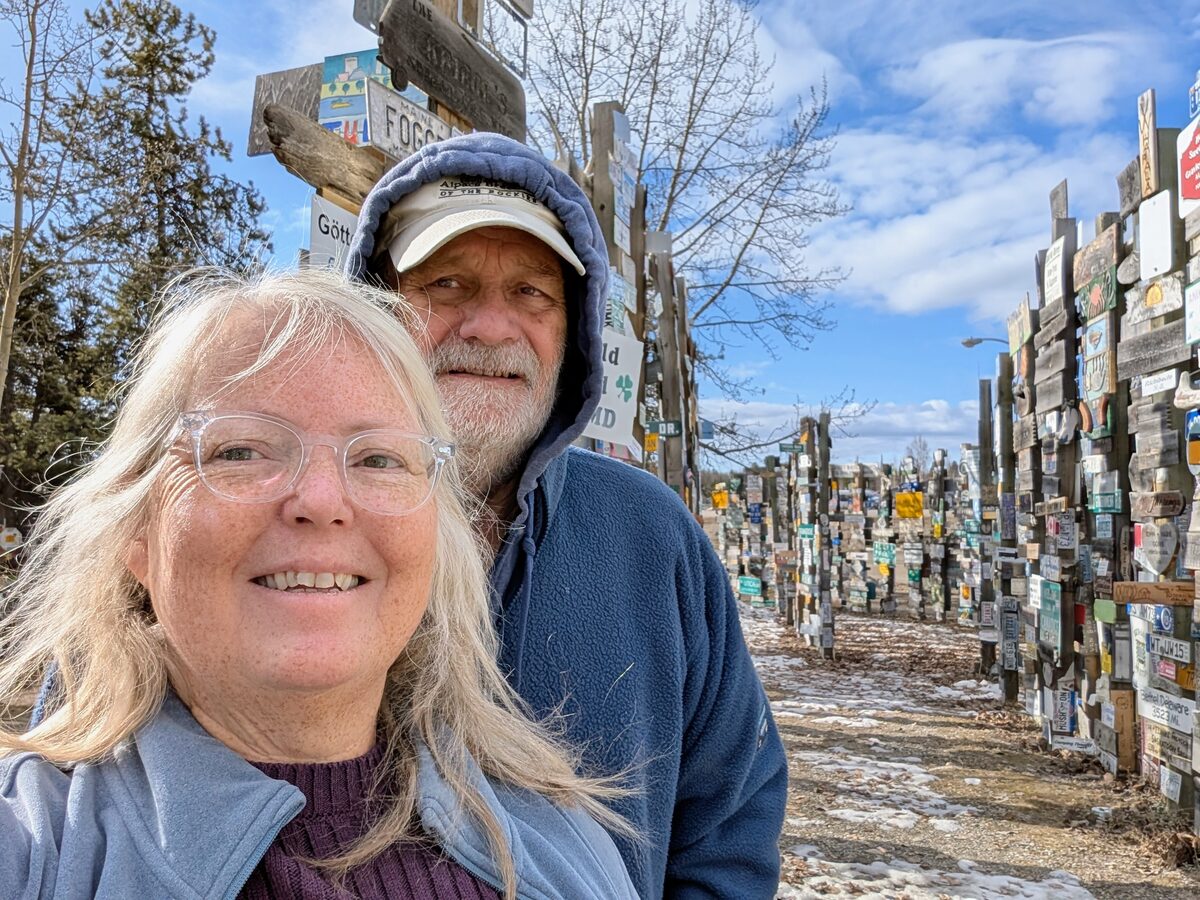
By this point, we were just ready to drive. We stopped at the Sign Post Forest in Watson Lake — one of my favorite AlCan landmarks. It was not opened for the season — And still buried in snow. So that stop wasn’t long.
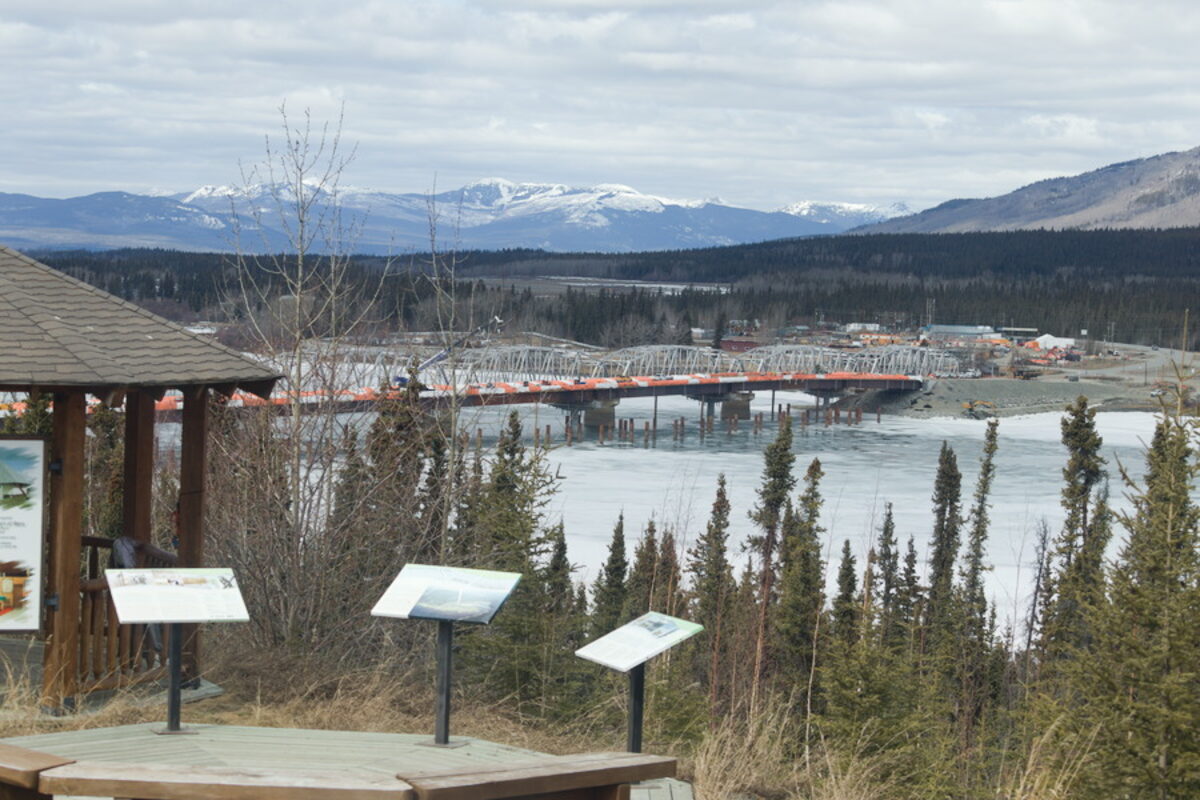
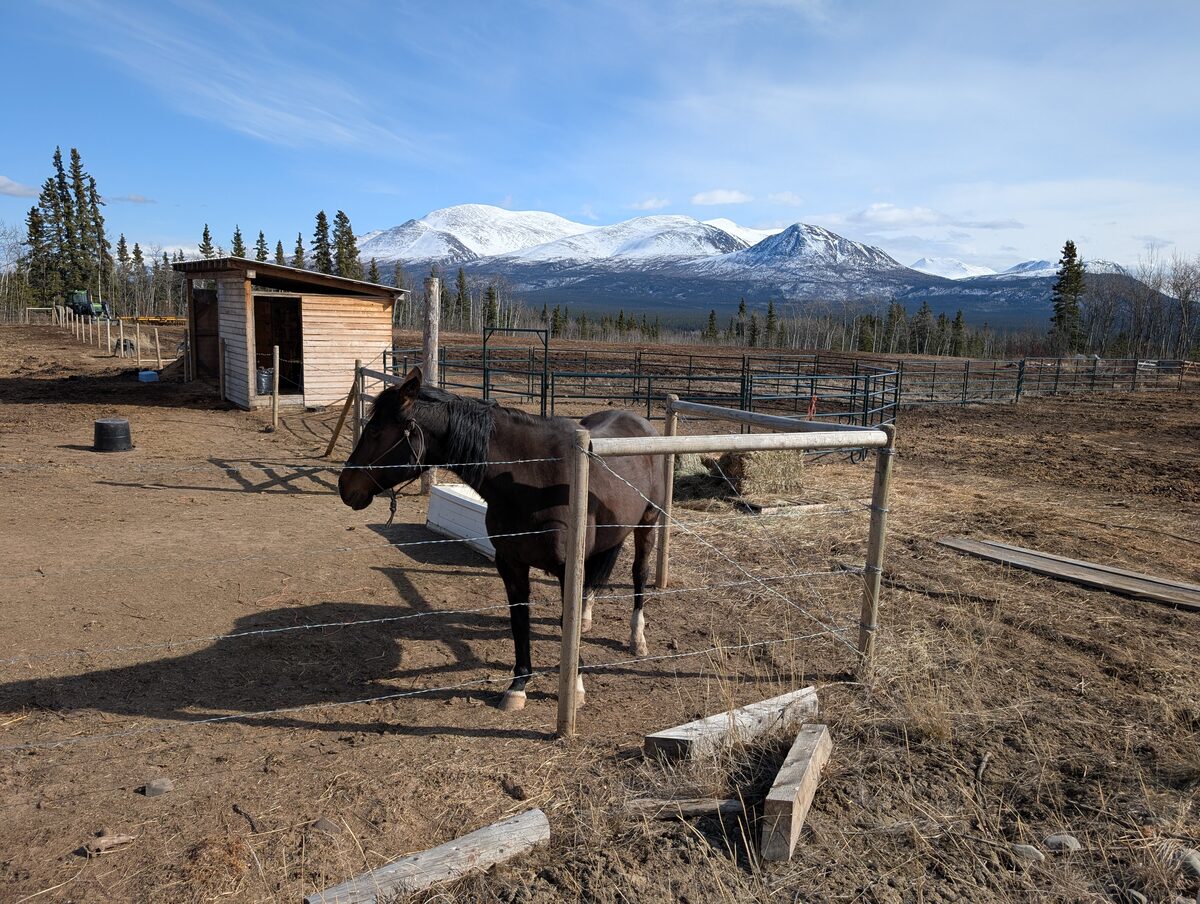
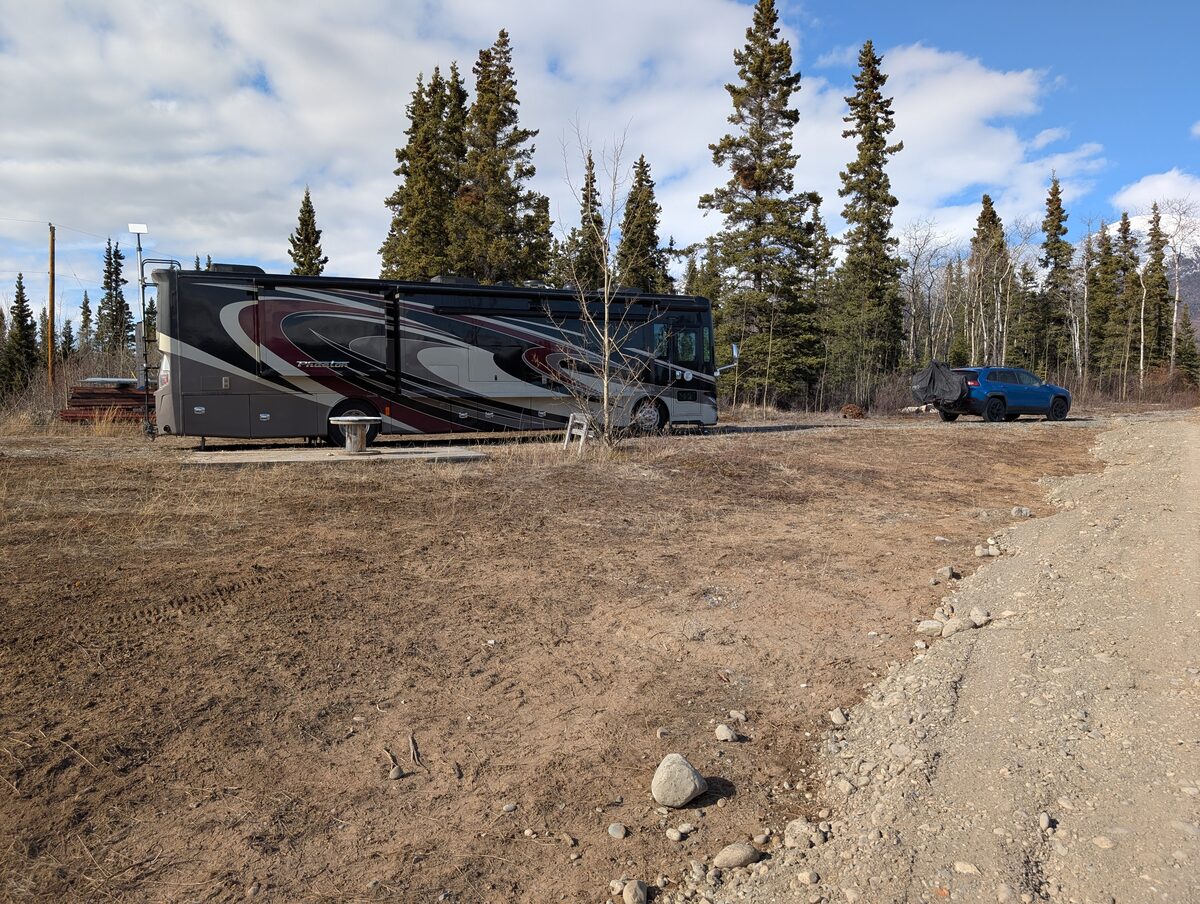
Somehow we just kept driving and driving, and ended up logging two days’ worth of miles in one push. We found a late-accepting Harvest Host outside of Haines Junction — a family farm with a drop-dead gorgeous view. Totally worth it.
Day 7 – Frost Heave Day
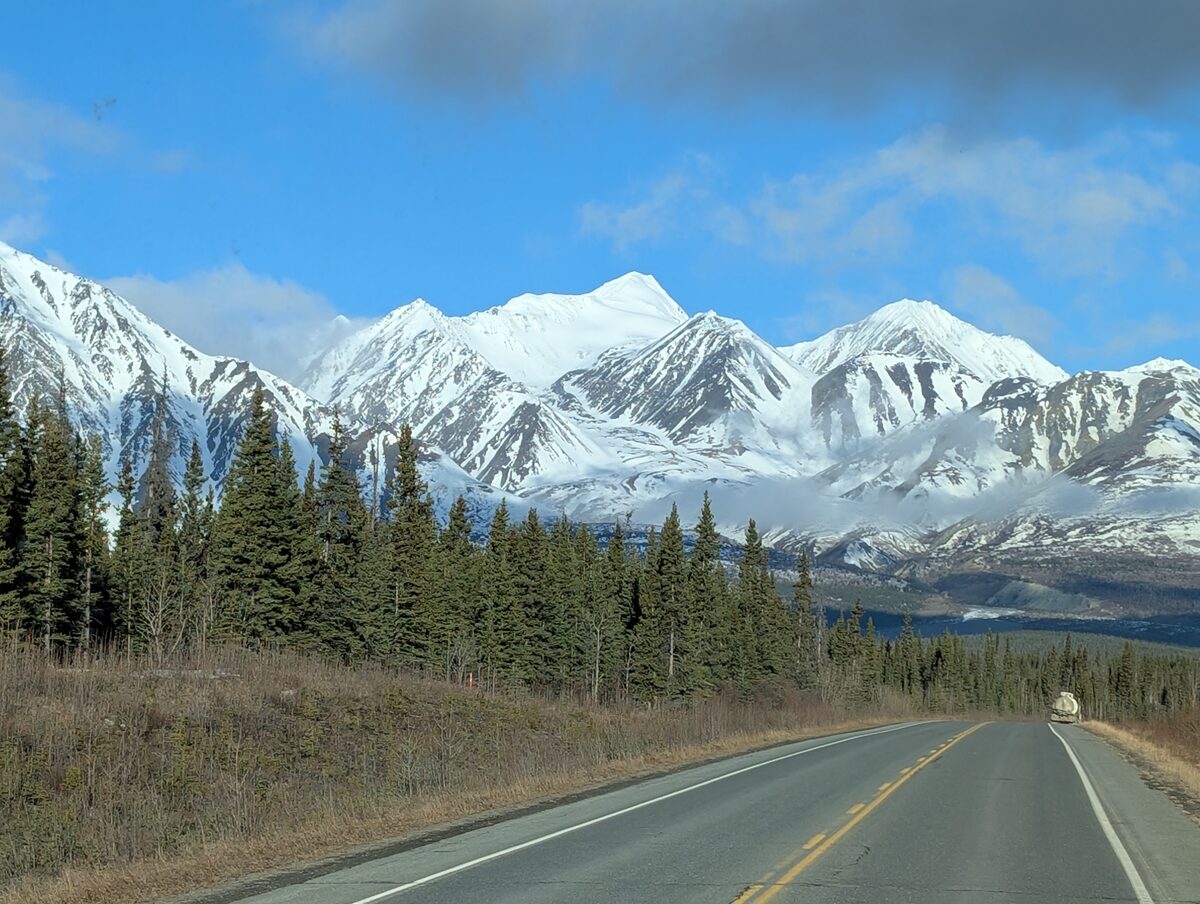
You’ll hear people talk about rough roads on the AlCan. In our previous experience, they were manageable. This trip? This was the roughest we’ve seen it. Between Haines Junction and Tok, the frost heaves were real. These are spots where the asphalt has buckled and risen from the freeze-thaw cycle — and if you don’t slow down, it’s a bucking bronco situation in a Class A. They’re usually marked, but being early in the season, the signage was thinner than ideal.
Slow down. Take it easy. Your RV will thank you.
And, back into the US
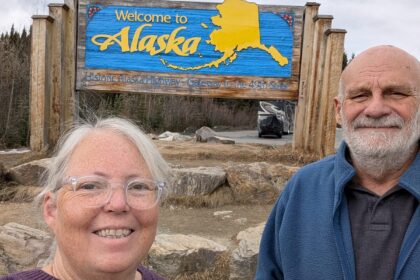
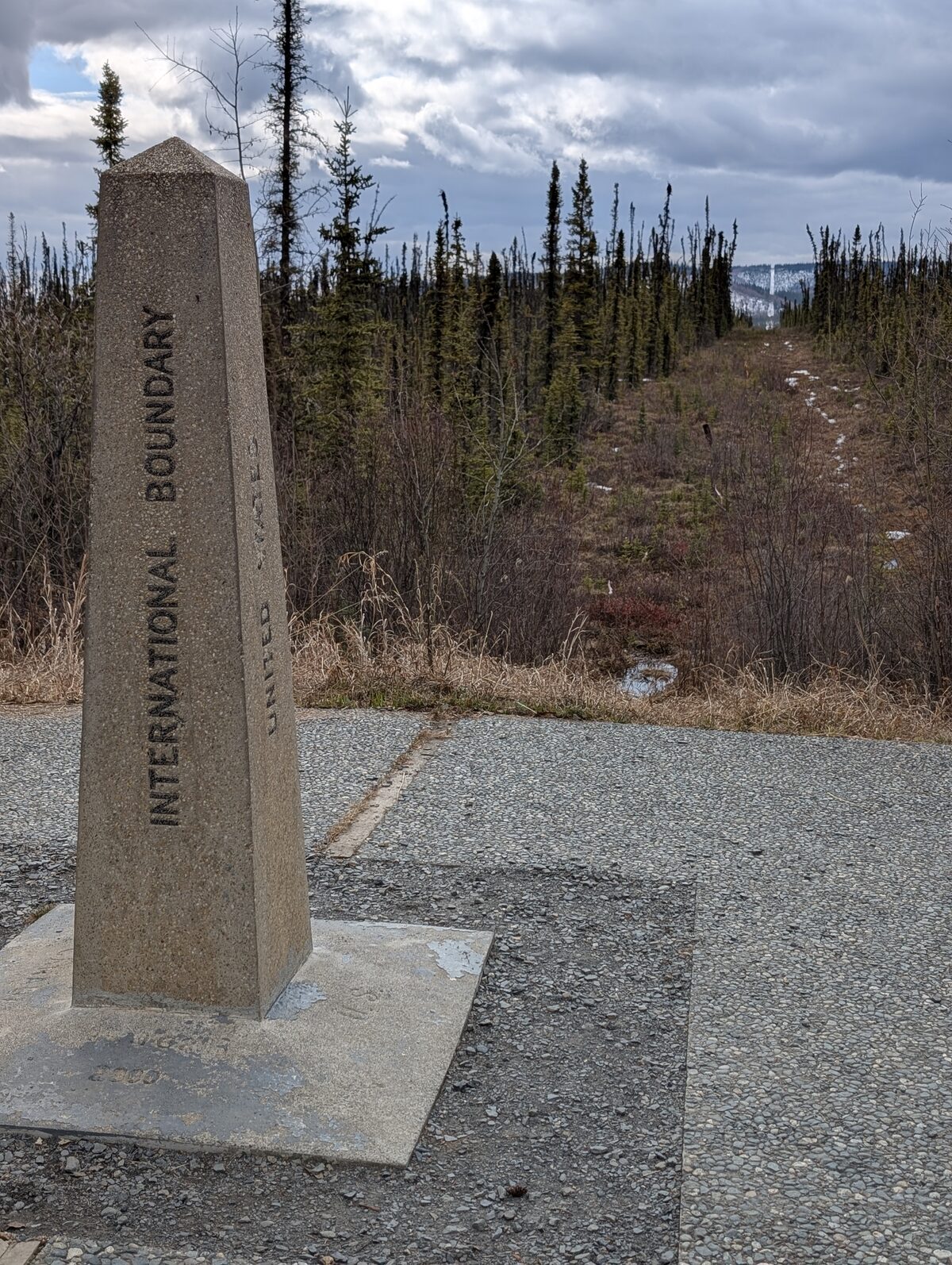
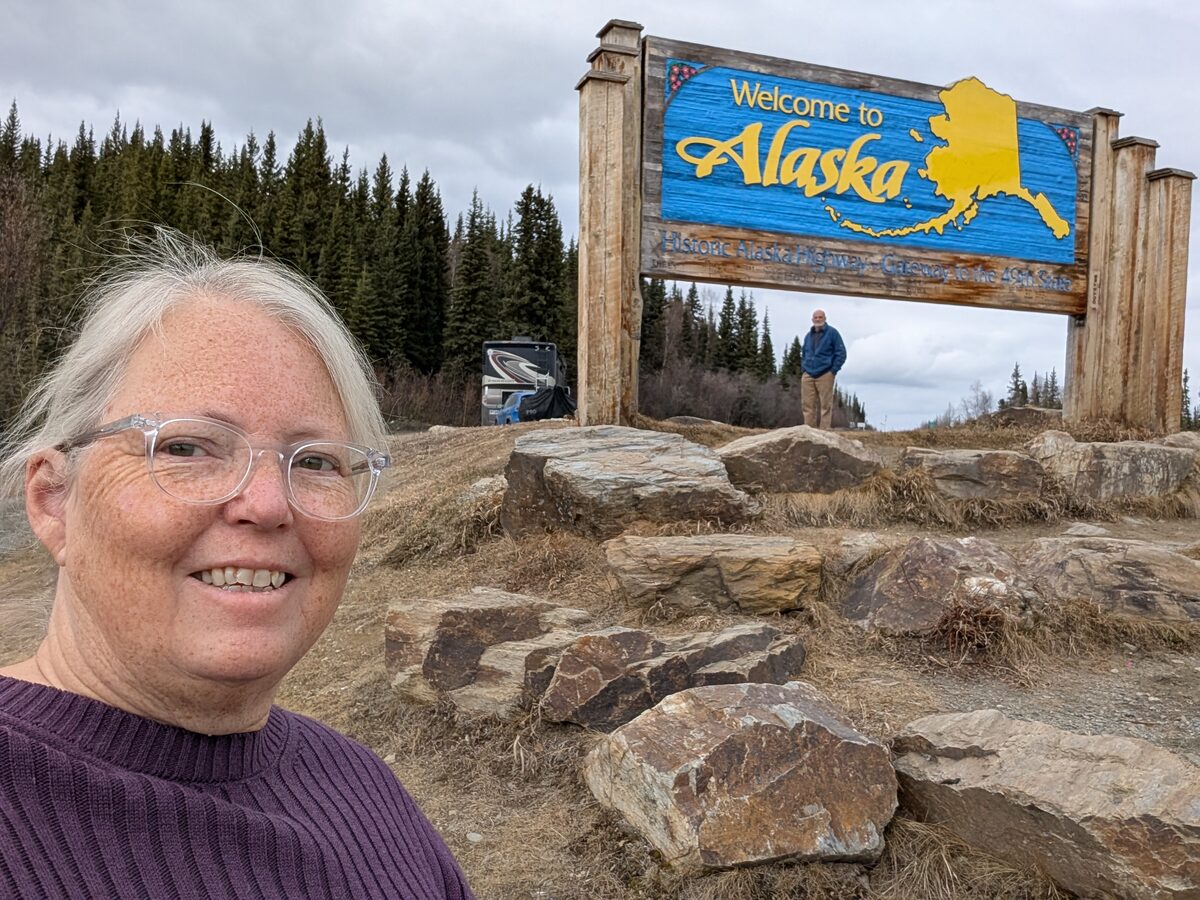
Then: the Alaska border crossing. Total non-event. Smooth, quick, a “normal” crossing. We did stop to look at the physical border marker and the firebreak. There’s also a memorial there recognizing the African American soldiers who built the Alaska Highway — a genuinely moving piece of history. If you’re interested, there’s a great documentary about it on YouTube.
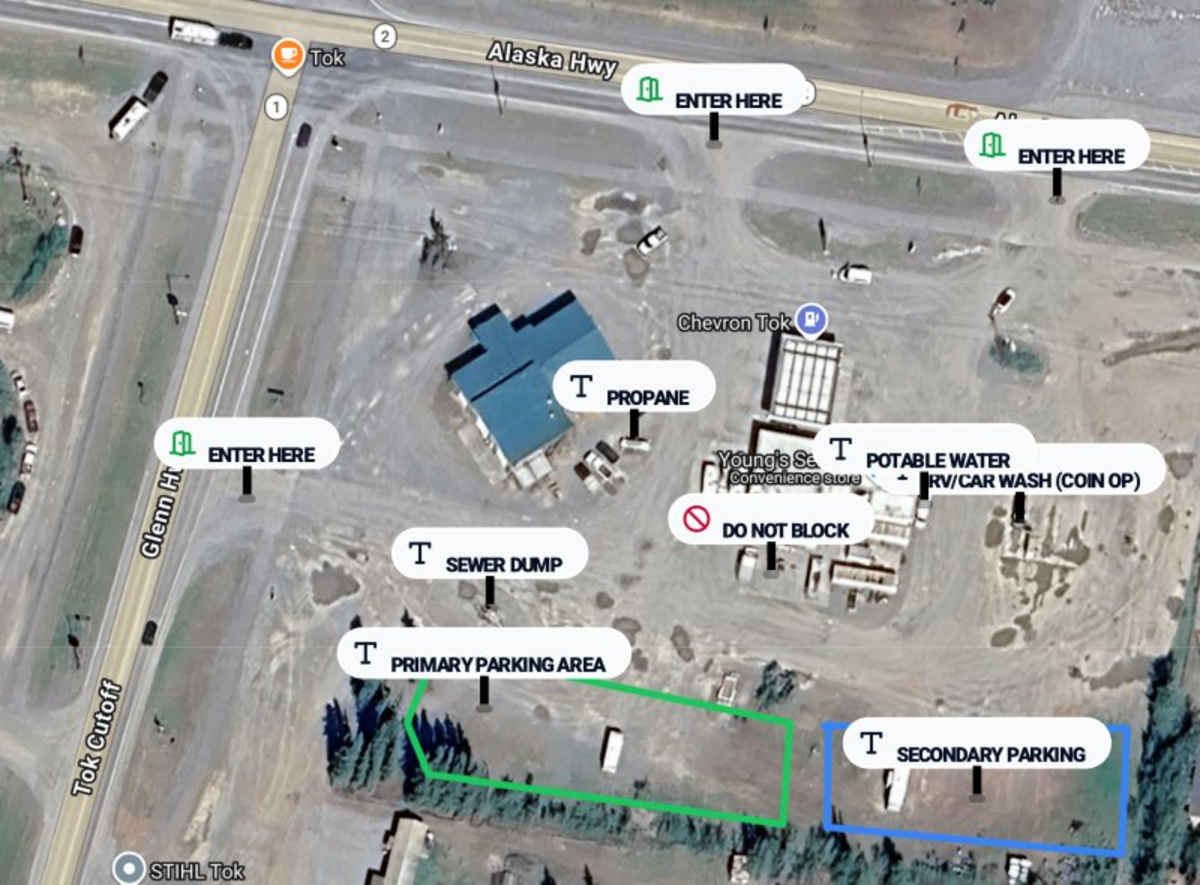
We stayed that night at a Harvest Host outside of Tok — a Chevron station with lots of room and decent gas prices. Yes, we’ll stay there again.
Day 8 – Arrival in Anchorage
From Tok, we left the AlCan and headed south on the Richardson-Glenn Highway — one of our absolute favorite drives in all of Alaska. The views are stunning. We still had to watch for frost heaves, but the scenery more than made up for it.
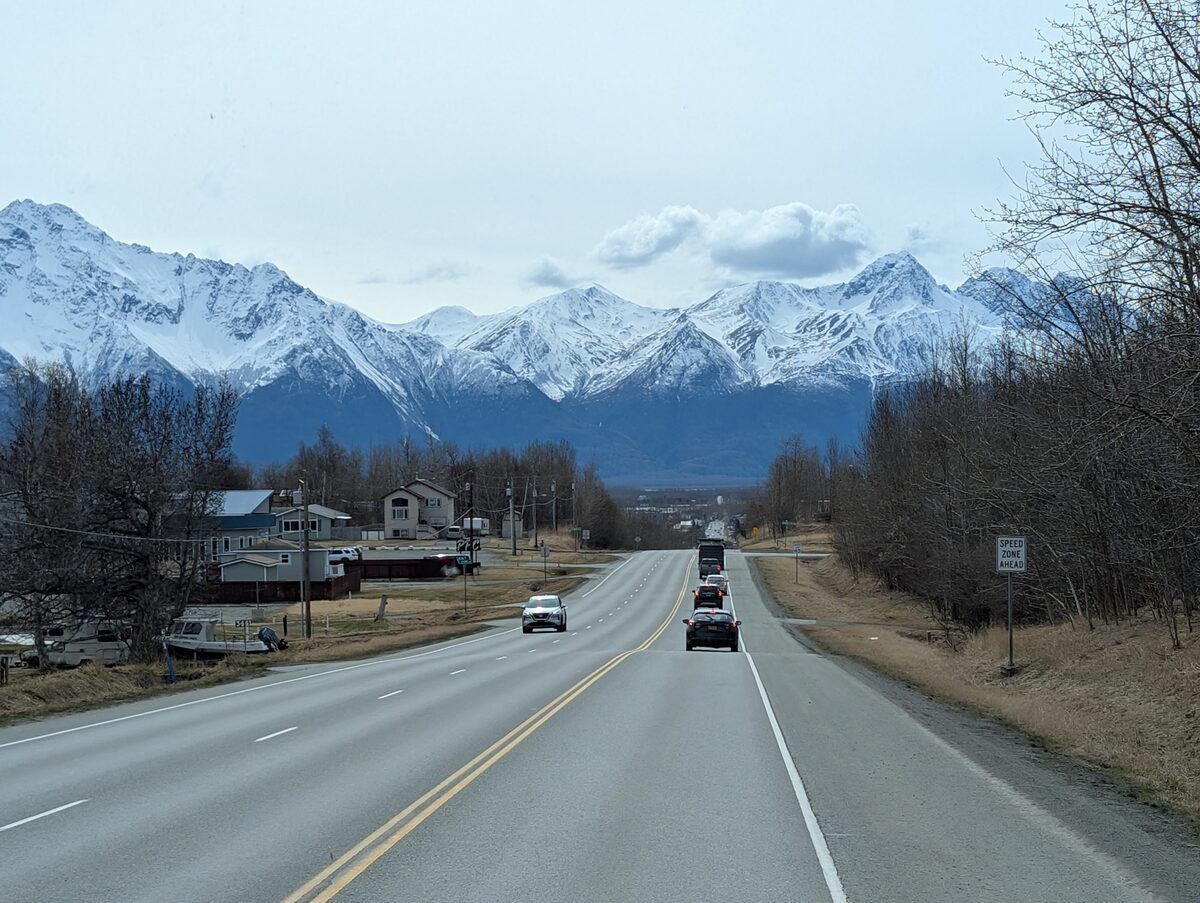
We rolled into Anchorage 5 days ahead of schedule, ready for whatever the summer had in store.
Another successful crossing of the AlCan. ❤️
A Few AlCan Tips for RVers Planning This Drive
- Give yourself time. We budgeted two weeks and used eight days. The buffer was worth the peace of mind.
- Stock up before the border, not after. Bring meat, bring groceries — it’s allowed for personal use, and yes, Alaska is expensive.
- Don’t fear the Canadian border. Just be honest, have a sensible story, and you’ll be fine.
- Harvest Hosts are your friend on this route. Several great options along the way and they add so much to the experience.
- Liard Hot Springs is non-negotiable. Don’t skip it.
- Slow down for frost heaves. Especially early season.
- Build in a night at the Tok Chevron Harvest Host. Easy stop, great value.
Have you driven the AlCan? Drop your tips and questions in the comments — I love comparing notes with other RV travelers who’ve made this epic drive!